TL;DR
A Bolde report argues that adults who were expected to be unusually responsible as children may feel uncomfortable with playful, unstructured group socializing. It connects that idea to research on parentification and childhood play, but the cited research does not establish that every “mature” child will struggle at parties or prove a direct causal link.
A Bolde report says adults who were treated as “the mature one” in childhood may feel out of place when social gatherings turn playful and unstructured, linking that experience to early responsibility and fewer opportunities for peer play. The article draws on psychologists’ commentary and research about childhood play, but the material it cites does not show that childhood maturity alone causes later discomfort at parties.
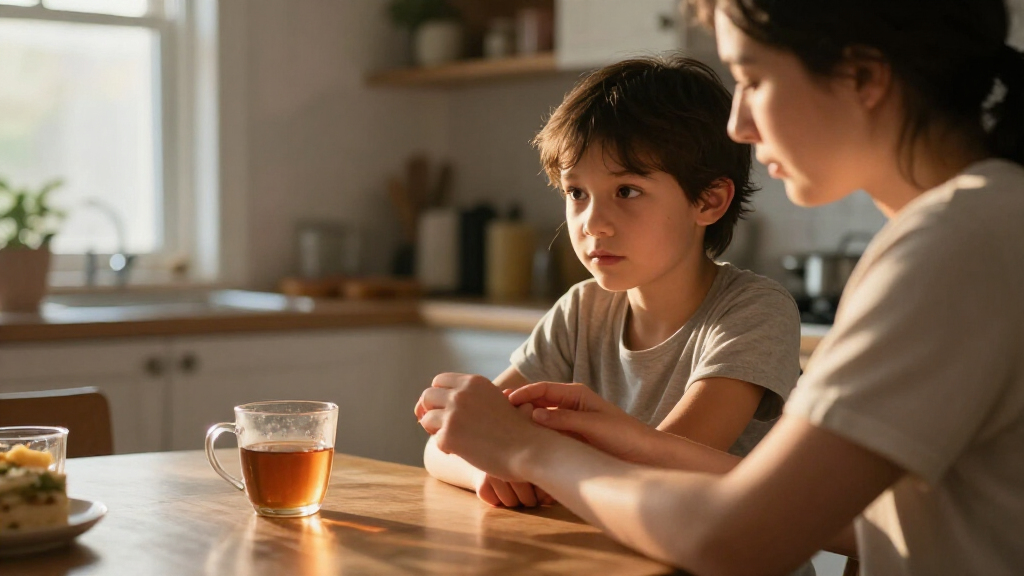
The report describes a pattern in which a child is praised for being easy, helpful and self-sufficient, sometimes while taking on emotional or practical responsibilities that would ordinarily belong to adults. It says some children do so because of family circumstances, such as a parent’s illness, divorce or care needs in the household. Others may simply learn to monitor adults’ moods and try not to add to their burdens. The article stresses that not every responsible child has been parentified.
Clinical and forensic psychologist Ahona Guha, writing for Psychology Today, describes parentification as a reversal of roles in which a child cares for a parent, physically or emotionally. Guha says such children may be praised as mature while missing ordinary parts of childhood, including play, school and friendships with peers. Licensed marriage and family therapist Annie Wright told Business Insider that parentified children “learn very early on that their needs and wants don’t matter as much” as the needs of their caregivers.
To explain why this could matter socially, the report cites psychologist Peter Gray’s 2011 paper in the American Journal of Play, which argues that free play with other children helps them learn to form friendships, relate as equals and regulate emotions. It also refers to Scientific American reporting on educational psychologist Anthony Pellegrini’s view that children develop social competence by negotiating rules with peers. The article applies these ideas to adult parties, where there may be no assigned role and the social activity can shift quickly from conversation to joking, dancing or games.
The report highlights a distinction between being capable in social settings and feeling at ease in them. Someone who grew up managing responsibilities may be comfortable organizing, helping or having a focused conversation, yet less comfortable when a group expects everyone to join in without a clear purpose. That description may help readers make sense of a particular experience, but it is not a diagnosis and does not establish why any one person feels awkward.
The subject also matters because childhood responsibilities can be mistaken for simple maturity. Guha’s account of parentification points to a possible cost when a child’s needs are consistently subordinated to an adult’s: the child may have less time or freedom for peer relationships and play. The source material does not quantify how common this is, or establish that missing playful experiences will produce a specific adult outcome. It presents a plausible connection, not a prediction for all children.
Products Worth Considering

We're Not Really Strangers Kartenspiel We're Not Really Strangers Ausgabe für Paare, um ihre Beziehung zu stärken, 150 Fragen und Joker für einen … mit deinem Partner (in englischer Sprache)
Für Paare, die ihre bestehende Verbindung vertiefen und Seiten enthüllen, von denen sie nie wussten, dass sie existieren

WHAT DO YOU MEME?, Let's get deep US, Exciting question Game for Couples, 3 Intimacy Levels, Ideal for Date Nights, for 2 Players Aged 17 and Over
💌 LET'S GET DEEP US: This exciting ADULT GAME takes your relationship to a new level with exciting…

Intimacy-Kartenspiel von BestSelf – 150 fesselnde Gesprächsstarter für Paare zur Stärkung ihrer Beziehung, Romantik, Vertrauen, Offenheit und Schwachstellen bestes Kartenspiel Romantisches Geschenk
Perfekte Ergänzung zur Verabredung am Abend: Das Intimacy-Kartenspiel wird Ihnen helfen, beziehungsaufbauende Gespräche mit brillanten, lustigen und ansprechenden…
As an affiliate, we earn on qualifying purchases.
Parentification and Peer Play
The article uses parentification for the more serious end of childhood responsibility, rather than treating every helpful or well-behaved child as parentified. Guha’s description concerns a child taking on a caregiving role toward a parent. Wright’s remarks, as quoted by Business Insider, describe how that arrangement can teach a child to give priority to caregivers’ needs. These are attributed professional perspectives, not findings that every family expectation has the same effect.
Research on play offers a related but separate line of context. Gray’s 2011 paper argues that free play among children provides opportunities to practice cooperation and emotional regulation. Scientific American’s account also discusses animal studies in which rats deprived of play during peak play periods later showed less social activity. Those findings are suggestive rather than proof about people. The same reporting notes that Pellegrini questioned how much cause and effect can be inferred from human research. Together, the sources support interest in peer play, but not a definitive explanation for adult party discomfort.
““learn very early on that their needs and wants don’t matter as much””
— Annie Wright, licensed marriage and family therapist, quoted by Business Insider
What the Research Cannot Establish
The source material does not provide a new study, sample size, or measure of how often adults who were “the mature one” feel uncomfortable at parties. The Bolde article is a reported interpretation drawing together professional commentary and research on play; it does not show that the proposed pattern applies broadly or that one childhood experience directly causes a particular adult response.
It is also unclear how the report’s broad phrase “the mature one” maps onto parentification, which Guha describes more specifically as a child caring for a parent. A child may be responsible for many reasons, and social discomfort can have other explanations. The animal research cited is not direct evidence of the same effect in humans, while the human evidence described in the article has limits around cause and effect. No treatment recommendations or outcome guarantees are established by the material.
How to Read the Claim Carefully
The immediate development is the publication of Bolde’s account, not a newly announced clinical finding or policy change. Readers looking to apply the idea to their own lives should distinguish a recognizable personal experience from a psychological conclusion: feeling awkward during group play does not, by itself, show that someone was parentified or that childhood play was missing.
Further evidence would be needed to establish how common this experience is and whether childhood caregiving roles predict particular adult social patterns after other factors are taken into account. The report does not identify a forthcoming study or follow-up. For now, its central point is best understood as a possible explanation, supported by related research on play and professional accounts of parentification, rather than a confirmed rule about adults who were responsible children.
Key Questions
What does the report mean by “the mature one”?
It refers broadly to a child seen as unusually responsible, helpful or undemanding. The term is not itself a clinical label, and the report says not every child described this way was parentified.
What is parentification?
Psychologist Ahona Guha describes it as a role reversal in which a child takes on physical or emotional caregiving for a parent. That specific definition is narrower than simply being well behaved or helpful.
Does research prove that responsible children struggle at parties as adults?
No. The cited material discusses parentification and the social value of peer play, but does not establish that childhood responsibility causes adult discomfort in groups or that the pattern applies to everyone.
Why does the article focus on play with other children?
It cites research arguing that peer play gives children practice in friendship, negotiation, emotional regulation and relating as equals. The evidence described supports interest in those opportunities, but leaves questions about cause and effect.
Source: bolde.com