
Couples relationship journals range from quick daily prompts to structured workbooks for communication and conflict. I’d put The Two-Pen Relationship Workbook first overall for couples who want a clear, shared program, while A Year of Us stands out for easy daily conversation and Our Connection Journal for a slower weekly rhythm. The main tradeoff is whether you want light prompts, practical exercises, or a keepsake focused on your story. Consider how much time you both want to spend writing and whether you’ll use the journal casually or work through a specific relationship goal. Read on for the full breakdown of all 15 options and how I’d match each one to a couple’s needs.
Key Takeaways
- Structured workbooks lead for skill-building: The Two-Pen Relationship Workbook, Reconnect, and Love More, Fight Less offer a more directed approach than prompt-only journals.
- Daily and weekly formats serve different routines: A Year of Us and One Question a Day for You & Me favor brief, regular reflection, while Our Connection Journal and The Marriage Journal are built around a weekly pace.
- Back-and-forth journals lower the pressure of writing together: Clever Fox and Back and Forth Journal for Couples suit partners who prefer taking turns over completing every page side by side.
- Memory keeping is a distinct goal: Our Bucket List Adventures and the Anniversary Journal focus on plans, milestones, and shared history rather than relationship exercises.
- Prompt volume does not equal structure: The Questions for Couples Journal offers many conversation starters, while guided programs such as BestSelf and The Two-Pen workbook give couples a defined path to follow.




| couples relationship journal | Format | Page count |
|---|---|---|
| Clever Fox Couple’s Journal to | A5 notebook and organizer | — |
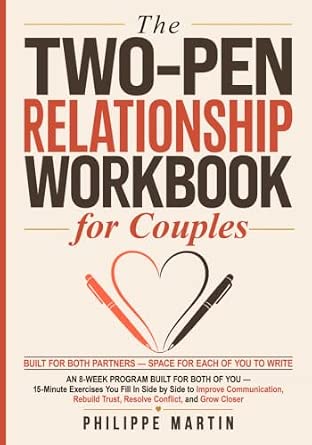
| The Two-Pen Relationship Workb | Relationship workbook | Not specified in supplied product information |
| A Year of Us: A Couple’s Journ | Question-a-day couples journal | — |
| Back and Forth Journal for Cou | Couples journal | — |
| Couples Journal for Him and He | Couples journal to fill out together | — |
| Our Bucket List Adventures: Pl | Guided journal | — |
| One Question a Day for You & M | Three-year journal | — |
| The Relationship Check-In Jour | Couples journaling book | — |
| Our Connection Journal: 52 Wee | — | 150 pages |
| Reconnect: A Marriage Counseli | Marriage counseling workbook | Not specified in supplied product data |
| BestSelf Relationship Journals | Guided workbook | Not provided |
| Anniversary Journal for Couple | Notebook | 253 pages |
| The Questions for Couples Jour | Journal | Not provided |
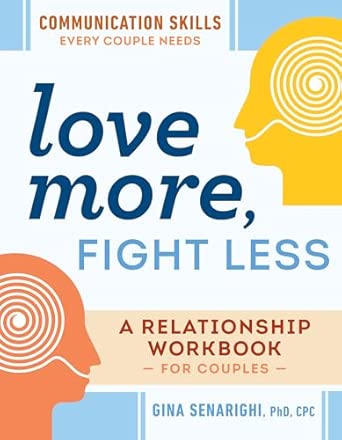
| Love More | Relationship workbook | Not provided |
| The Marriage Journal | Notebook and organizer | 231 pages |
More Details on Our Top Picks
Clever Fox Couple’s Journal to Fill Out Together Back & Forth, Periwinkle
The Clever Fox Couple’s Journal is the clearest fit for couples who want a journal to turn shared plans into actual outings. Its prompts cover values, preferences, and future plans, while 100 date and adventure ideas give couples a practical starting point when deciding what to do together. The back-and-forth format supports taking turns, and the A5 size, lay-flat binding, pen loop, and elastic closure make it easier to keep handy and write in together. Compared with A Year of Us, which centers on a daily conversation prompt, this journal leans more toward planning and saving experiences. The tradeoff is that it asks for more active writing and organizing, so it may feel like homework to couples who want only quick conversation starters. Its faux-leather cover and accessories add polish, but the product details do not specify a page count or how the prompts are divided.
Pros:- Includes 100 date and adventure ideas to help couples move from talking about plans to choosing an activity.
- Prompts address relationship preferences, values, and future plans, not only light conversation.
- Lay-flat binding, elastic closure, and pen loop support writing together and keeping the journal organized.
- A5 format is portable while leaving room for written responses.
Cons:- The activity and planning focus may be less appealing to couples who want a low-effort daily question.
- No page count or timeline is provided, making the journal’s overall writing commitment hard to judge.
- Faux-leather cover material may not suit buyers who prefer a paper or fabric cover.
Best for: Couples who enjoy planning dates together and want prompts plus a place to record shared adventures.
Not ideal for: Partners seeking a brief daily ritual or a structured relationship-counseling program; this journal emphasizes prompts, activities, and date planning rather than a defined daily or therapeutic curriculum.
- Format:A5 notebook and organizer
- Dimensions:8.3 x 5.8 inches
- Paper size:A5
- Cover:Periwinkle faux leather
- Binding:Lay-flat binding; binding type otherwise unspecified
- Weight:0.56 kg
- Prompts and activities:Relationship prompts and 100 date and adventure ideas
- Included features:Pen loop, elastic closure, stickers, and user guide
Our verdict“Choose this journal if you want date inspiration and shared planning built into your couple-writing routine.”
The Two-Pen Relationship Workbook for Couples: An 8-Week Program Built for Both of You — 15-Minute Exercises You Fill In Side by Side to Improve … Trust, Resolve Conflict, and Grow Closer
The Two-Pen Relationship Workbook is the most explicitly program-based option in this group: its title describes an eight-week plan with side-by-side exercises designed for about 15 minutes. That structure may suit couples who want to set aside regular time for trust, conflict, and communication work rather than rely on casual prompts. Compared with the more activity-oriented Clever Fox Couple’s Journal, this workbook puts relationship skills ahead of date planning; compared with A Year of Us, it suggests a planned sequence rather than one question per day. The commitment is also its main tradeoff: couples need to participate consistently, and a workbook focused on difficult topics may not match a lighthearted journaling goal. The supplied product information gives no page count, binding, or materials, so I can’t judge how substantial or portable the physical book is.
Pros:- Eight-week structure gives couples a defined plan rather than an open-ended blank journal.
- Side-by-side exercises are designed for both partners to contribute.
- Stated 15-minute sessions offer a clear time commitment for busy couples.
- Focuses on trust and conflict alongside relationship growth.
Cons:- A regular eight-week commitment may not suit couples who prefer occasional, unstructured journaling.
- The conflict and trust focus may feel too serious for buyers seeking mostly fun prompts or date inspiration.
- Product details provided do not specify format, page count, binding, or materials.
Best for: Couples willing to schedule short, regular sessions and work through guided exercises about trust, conflict, and communication.
Not ideal for: Partners looking mainly for playful conversation starters, date ideas, or a keepsake journal; the title presents a time-bound workbook program instead.
- Format:Relationship workbook
- Program length:8 weeks
- Exercise duration:15 minutes
- Participation format:Both partners fill in exercises side by side
- Stated focus:Trust, conflict resolution, and growing closer
- Page count:Not specified in supplied product information
Our verdict“Pick this workbook if you want a time-limited, exercise-led routine for working on relationship skills together.”
A Year of Us: A Couple’s Journal: One Question a Day to Spark Fun and Meaningful Conversations (Question a Day Couple’s Journal)
A Year of Us makes the most sense for couples who want a small, repeatable prompt rather than a workbook session or a full date-planning project. Its one-question-a-day format gives partners an easy cue for conversation, with the stated aim of mixing fun and meaningful topics. Compared with The Two-Pen Relationship Workbook, it appears less like a time-bound skills program and more like a daily ritual; compared with the Clever Fox Couple’s Journal, it offers less emphasis on activities and recording adventures. That simplicity lowers the effort required to get started, but it also means the product description does not promise a structured path for addressing conflict or improving communication. A daily cadence may be difficult to sustain for couples with mismatched schedules, and the supplied details do not specify the journal’s dimensions, binding, or page layout.
Pros:- One question per day gives couples a clear, low-preparation way to start talking.
- The stated mix of fun and meaningful conversation topics can support both light and more reflective exchanges.
- Daily prompts provide a simpler routine than the eight-week exercises in The Two-Pen Relationship Workbook.
- A question-led approach can suit couples who find blank-page journaling difficult.
Cons:- Daily use may be hard to maintain when partners have different schedules or routines.
- The described format does not include the date-planning emphasis of the Clever Fox Couple’s Journal.
- Product details provided do not specify dimensions, binding, page count, or materials.
Best for: Couples who want a brief daily prompt to spark conversation and build a consistent shared journaling habit.
Not ideal for: Partners seeking date-night planning, a detailed relationship-skills program, or a journal with confirmed physical specifications; those details are not supplied here.
- Format:Question-a-day couples journal
- Prompt frequency:One question a day
- Stated content:Fun and meaningful conversation prompts
- Intended use:Spark conversations between partners
- Dimensions:Not specified in supplied product information
- Binding:Not specified in supplied product information
Our verdict“Choose this journal if one short shared question a day sounds more manageable than a workbook or activity planner.”
Back and Forth Journal for Couples: A Fun and Playful Way to Deepen Your Bond, Spark Joy and Thrive One Page at the Time
Back and Forth Journal for Couples is positioned around a playful, page-by-page way to connect, making it a natural fit for partners who would rather take turns writing than follow a daily schedule or formal program. That framing sets it apart from A Year of Us, which specifies a daily question, and from The Two-Pen Relationship Workbook, whose title promises an eight-week course of timed exercises. Here, the appeal is a more relaxed shared activity aimed at sparking joy and deepening a bond. The limitation is that the supplied description gives no detail about prompt types, page count, or physical construction, so buyers cannot tell how much structure or writing space it offers. Couples who need date ideas or targeted conflict exercises may get more direction from the Clever Fox journal or Two-Pen workbook.
Pros:- Back-and-forth framing gives partners a shared way to contribute rather than relying on one person to write.
- Playful positioning may suit couples who want connection-building without a formal workbook tone.
- The title emphasizes taking the journal one page at a time, without stating a daily requirement.
- Offers a different, less programmatic approach than The Two-Pen Relationship Workbook.
Cons:- The supplied description does not explain the prompts or the range of topics covered.
- No page count, dimensions, binding, or materials are provided for judging physical value and usability.
- No date ideas or specific conflict-resolution exercises are listed.
Best for: Couples who enjoy taking turns writing and want a light, playful activity without a stated daily schedule or program length.
Not ideal for: Partners who need clearly described prompts, date-planning tools, or a structured set of communication exercises; those features aren’t specified in the supplied information.
- Format:Couples journal
- Participation style:Back-and-forth writing
- Stated tone:Fun and playful
- Stated purpose:Deepen the bond and spark joy
- Prompt details:Not specified in supplied product information
- Dimensions and materials:Not specified in supplied product information
Our verdict“Pick this journal if a playful, turn-taking format appeals more than daily prompts or structured relationship exercises.”
Couples Journal for Him and Her to Fill Out Together: Fun and Deep Questions to Enjoy, Reflect and Strengthen Your Relationship | Bucket Lists to Create and Record Your Adventures
Couples Journal for Him and Her to Fill Out Together combines two uses: conversation prompts and space for building and recording shared bucket-list adventures. That mix gives it a broader activity-and-reflection role than A Year of Us, whose title centers on one daily question, while its bucket-list angle overlaps with the Clever Fox Couple’s Journal and its date ideas. The distinction is that this product specifically calls out both fun and deep questions alongside creating and recording adventures, rather than describing a set of 100 date suggestions. That can work well for couples who want to reflect and plan in the same journal. The tradeoff is limited product detail: no schedule, prompt count, page count, or physical specifications are supplied, making it harder to judge how much guidance it offers. Couples wanting a clearly paced program may prefer the Two-Pen workbook.
Pros:- Combines fun and deeper questions, giving couples more than one conversation tone.
- Bucket-list creation helps partners turn shared hopes into planned activities.
- Recording adventures adds a memory-keeping purpose alongside reflection.
- The combined focus differs from the daily-question approach of A Year of Us.
Cons:- No prompt count or usage schedule is provided, so the journal’s depth and pacing are unclear.
- The supplied details do not specify dimensions, binding, materials, or page count.
- Couples seeking a structured communication course may find the Two-Pen workbook more clearly directed.
Best for: Couples who want both reflective conversation prompts and a shared place to create and record bucket-list adventures.
Not ideal for: Partners who want a specified daily routine, a known volume of date ideas, or a clearly described timed program; the supplied information does not confirm those details.
- Format:Couples journal to fill out together
- Prompt types:Fun and deep questions
- Shared activities:Create couple bucket lists
- Memory keeping:Record shared adventures
- Prompt count and schedule:Not specified in supplied product information
- Dimensions and materials:Not specified in supplied product information
Our verdict“Choose this journal if you want reflective questions and a shared adventure list in one book, without needing a stated program schedule.”
Our Bucket List Adventures: Plan Your Life Dreams as a Couple and Celebrate Your Favorite Memories (Heirloom Story Books and Guided Journals)
I’d choose Our Bucket List Adventures for couples who want their journal to lead to plans and memories, rather than regular relationship check-ins. Its focus on life dreams and favorite experiences makes it a natural fit for listing things to do together and preserving the stories behind them. Compared with One Question a Day for You & Me, which centers on recurring daily reflections, this book appears oriented toward milestone activities and keepsake-making. That can feel more motivating for couples who like having a shared project, but it may offer less support for ongoing communication or working through tension. The supplied product details don’t specify its page count, format, or prompt structure, so I wouldn’t choose it based on assumptions about how much writing space it provides. Its strongest appeal is its adventure-and-memory angle.
Pros:- Centers shared dreams and activities, giving couples a practical reason to write together.
- Makes room for celebrating favorite memories as well as planning future experiences.
- Keepsake-oriented concept may suit couples who value recording their shared story.
Cons:- The supplied product data does not establish how many prompts, pages, or writing exercises are included.
- Its adventure focus may provide less routine relationship reflection than One Question a Day for You & Me.
- Couples looking for counseling-style exercises may find its stated focus too light.
Best for: Couples who enjoy planning shared experiences and want a guided place to record favorite memories.
Not ideal for: Couples seeking a structured weekly communication practice or a journal explicitly focused on resolving relationship challenges.
- Format:Guided journal
- Primary focus:Planning life dreams as a couple
- Memory focus:Celebrating favorite memories
- Series:Heirloom Story Books and Guided Journals
- Intended users:Couples
- ASIN:1950968839
Our verdict“Pick this for a shared bucket-list and memory-making journal, not for a daily check-in or counseling workbook.”
One Question a Day for You & Me: A Three-Year Journal: Daily Reflections for Couples
One Question a Day for You & Me is the clearest choice here for couples who want a small, repeatable reflection ritual. Its three-year format gives the daily prompt structure a longer arc: returning to the same date in later years can make changes in perspectives and shared life visible. That sets it apart from Our Connection Journal, which uses a weekly rhythm and three questions per session. Daily prompts may be easier to fit into a brief routine, but they also ask for more frequent follow-through and may leave little room for extended conversation. I’d favor this over an adventure-focused book when the goal is regular reflection, not planning outings. Couples who want guided exercises for difficult conversations should look instead at Reconnect; this title’s stated emphasis is daily reflection.
Pros:- Daily question format gives couples a clear, repeatable starting point for reflection.
- Three-year structure allows partners to revisit the same date over time.
- More suited to short regular check-ins than a weekly, multi-question format.
Cons:- Daily use requires more frequent commitment than Our Connection Journal’s weekly format.
- A single question a day may not provide enough space for complex conversations.
- The supplied product data does not specify page count, dimensions, or binding.
Best for: Couples who can make time for a brief daily prompt and want to revisit reflections across three years.
Not ideal for: Partners who prefer occasional longer sessions, or couples seeking a workbook specifically built around relationship challenges.
- Format:Three-year journal
- Prompt cadence:Daily
- Prompt structure:One question a day
- Stated purpose:Daily reflections for couples
- Intended users:You and your partner
- ASIN:1250163439
Our verdict“Choose this if you want a brief daily couple’s ritual and are willing to keep it going over three years.”
The Relationship Check-In Journal: Couples Journaling: Meaningful Couples Conversation Starters, Routine Talks with your Partner, Become a Better Wife, Husband, Girlfriend, Boyfriend
I’d place The Relationship Check-In Journal in the routine-conversation lane: its title promises meaningful starters and regular talks, which can help partners begin a discussion without having to invent the first question. Compared with Reconnect: A Marriage Counseling Workbook, it sounds more focused on opening conversations than on guided exercises and counseling-style work. That lighter framing may suit couples who want to talk more regularly without committing to a program, while offering less evidence of a step-by-step approach to persistent conflict. The listing supplied here doesn’t provide details such as prompt count, schedule, or page layout, so I can’t judge how much structure it delivers beyond its stated check-in focus. It makes the most sense as a conversation aid, not a substitute for a more intensive workbook.
Pros:- Explicitly focuses on meaningful conversation starters for partners.
- Routine-talk framing can help make relationship discussions a recurring habit.
- Broadly addresses couples across several relationship roles.
Cons:- The supplied data does not state the number of prompts or how the journal is organized.
- Offers less clearly defined therapeutic structure than Reconnect.
- The title’s emphasis on becoming a better partner may not appeal to couples seeking neutral, exploratory prompts.
Best for: Couples who want ready-made conversation starters to support regular, low-pressure relationship check-ins.
Not ideal for: Partners seeking a clearly specified multiweek program, therapeutic exercises, or detailed information about the journal’s contents before buying.
- Format:Couples journaling book
- Stated focus:Relationship check-ins
- Prompt type:Meaningful conversation starters
- Intended use:Routine talks with a partner
- Intended users:Couples
- ASIN:B0BCSCZGNL
Our verdict“Choose this for conversation starters and routine check-ins, but look to Reconnect for a more clearly workbook-led approach.”
Our Connection Journal: 52 Weeks of Exploration for Two (Cashew Brown, Linen/Leatherette) | Relationship Book for Couples | Couples Therapy Journal
Our Connection Journal offers one of the most clearly described routines in this group: once a week, both partners answer three questions designed to spark conversation and build connection. The weekly pace asks for less frequent upkeep than One Question a Day for You & Me, while still giving each session more room than a single daily prompt. Its stated research-backed prompts and connection tips also give it a more deliberate relationship-development focus than the bucket-list orientation of Our Bucket List Adventures. The tradeoff is that a weekly session still requires both partners to set aside time, and couples wanting a specific marriage-counseling workbook may prefer Reconnect. The keepsake-style hard cover and archival paper suit long-term storage, though a 5-by-8-inch book may feel compact for extensive written answers.
Pros:- 52-week structure creates a clear, manageable weekly routine.
- Both partners answer three questions, supporting participation from each person.
- Connection tips and research-backed prompts add relationship-focused guidance.
- Hard cover and archival paper suit keeping the journal as a long-term record.
Cons:- Weekly sessions still require both partners to make time consistently.
- The 5-by-8-inch format may limit space for lengthy written responses.
- Couples seeking a counseling-workbook format may prefer Reconnect.
Best for: Couples who want a defined weekly check-in with prompts for both partners and a keepsake-style physical journal.
Not ideal for: Couples who need a daily writing habit, extensive room for long answers, or a workbook centered on marriage counseling exercises.
- Duration:52 weeks
- Prompt cadence:Weekly
- Questions per week:Three
- Page count:150 pages
- Page size:5 x 8 inches
- Cover:Hard cover, cashew brown linen or leatherette
- Paper:Archival paper
- Binding:Hardcover
- ASIN:B09JS9D72Y
Our verdict“Choose this for a keepsake-quality weekly practice with prompts for both partners, rather than daily entries or intensive counseling exercises.”
Reconnect: A Marriage Counseling Workbook: Guided Conversations & Exercises for a Long-Lasting Relationship
Reconnect is the strongest fit for couples who want guided conversations and exercises, rather than a journal built mainly around memory keeping or short daily prompts. Its marriage-counseling workbook framing suggests a more directed approach than The Relationship Check-In Journal, whose supplied title centers on conversation starters and routine talks. That structure may appeal to partners who want a purposeful way to work on their relationship, but the title also makes it a less natural pick for couples seeking a light, playful shared journal like Our Bucket List Adventures. The available product information gives no page count, exercise schedule, or detailed curriculum, so I can’t compare its workload with the weekly format of Our Connection Journal. Choose it for its workbook intent, while recognizing that its specific structure isn’t established in the supplied data.
Pros:- Workbook format promises more direction than a collection of open-ended prompts.
- Guided conversations and exercises give partners an active way to engage with relationship topics.
- Its stated focus on a long-lasting relationship distinguishes it from adventure and memory journals.
Cons:- The supplied product details do not specify the exercise count, duration, or session schedule.
- Marriage-counseling framing may feel too serious for couples seeking a casual journaling ritual.
- Less clearly suited to recording shared memories than Our Bucket List Adventures.
Best for: Couples who want a guided workbook with conversations and exercises aimed at supporting a long-lasting relationship.
Not ideal for: Couples looking for a playful keepsake, a daily question journal, or a clearly stated program length and schedule.
- Format:Marriage counseling workbook
- Content:Guided conversations and exercises
- Stated goal:Support a long-lasting relationship
- Intended users:Couples
- Exercise schedule:Not specified in supplied product data
- Page count:Not specified in supplied product data
- ASIN:0593689887
Our verdict“Pick this for guided relationship conversations and exercises, but choose a daily or weekly journal if you want a defined check-in cadence.”
BestSelf Relationship Journals – 13-Week Guided Workbook, Him & Her Set
The Him & Her set suits partners who want guided reflection but prefer to write privately before sharing. Its 13-week format gives the process a defined endpoint, which can feel more approachable than committing to a yearlong journal such as The Marriage Journal. The paired format also gives each partner room to form their own thoughts rather than taking turns in one shared book. However, the supplied product information does not specify the prompt topics, page count, or binding, so I can’t compare its exercise depth with a structured workbook like Love More, Fight Less. The set is most compelling when both people are willing to write consistently and discuss what they choose to share. Couples seeking a keepsake for anniversaries or a clear weekly schedule may prefer a journal with those details confirmed.
Pros:- Two journals allow each partner to reflect privately
- A 13-week structure sets a manageable commitment
- Guided workbook format offers more direction than an unprompted blank journal
Cons:- The provided product details do not describe the prompts or weekly structure
- Separate books may offer less of a shared record than a single back-and-forth journal
- A 13-week plan is shorter than yearlong options such as The Marriage Journal
Best for: Couples who want a time-limited guided journaling routine and prefer to write in separate books before talking together
Not ideal for: Partners looking for a shared keepsake, a faith-based yearlong routine, or detailed information about prompt themes and book construction before buying
- Format:Guided workbook
- Duration:13 weeks
- Set format:Him & Her set
- Intended users:Couples
- Prompt details:Not provided
- Page count:Not provided
Our verdict“Choose this paired workbook if you want a guided, short-term routine with space for each partner to write independently.”
Anniversary Journal for Couples – Our Love Story Keepsake Book, Engagement & Anniversary Couples Gift for Men & Women, Wedding Memory Scrapbook, Great Gift Idea for Her
This journal is built to preserve a couple’s history, not primarily to guide regular relationship exercises. Its yearly reflection prompts and space for milestones trace a relationship from meeting through weddings, homes, and anniversaries; that makes it a better fit for memory keeping than a conversation-led title such as The Questions for Couples Journal. The linen hardcover, foil accents, dual ribbon bookmarks, and lay-flat binding give it a keepsake feel and make it practical to revisit together. The tradeoff is its annual, retrospective rhythm: couples seeking frequent prompts for resolving conflict or building communication may get more direction from Love More, Fight Less. At 253 pages and A4 size, it also needs more shelf and writing space than a compact journal. Its gender-neutral prompts welcome a broad range of couples.
Pros:- Yearly prompts support a lasting record of shared milestones
- Linen hardcover, foil accents, and dual ribbon bookmarks suit keepsake use
- Lay-flat binding makes it easier for two people to write together
- Gender-neutral prompts are designed for different kinds of couples
Cons:- Annual reflection is less suited to frequent, structured relationship check-ins
- A4 dimensions and 253 pages make it less portable than smaller journals
- Keepsake and scrapbook emphasis offers less direct communication coaching than Love More, Fight Less
Best for: Couples who want a substantial, inclusive book for recording annual reflections and relationship milestones together
Not ideal for: Partners seeking weekly communication exercises, conflict guidance, or a compact journal they can carry around
- Format:Notebook
- Calendar type:Yearly
- Page count:253 pages
- Paper size:A4
- Cover material:Linen
- Binding:Lay-flat
- Bookmarks:Two ribbon bookmarks
- Color:Green
- Item weight:0.85 kg
Our verdict“Pick this journal to archive a couple’s story and milestones, rather than as a hands-on workbook for everyday relationship skills.”
The Questions for Couples Journal: 500 Conversation Provoking Questions to Ignite Intimacy, Connection, and Fun in Your Relationship (Relationship Reignite Book Series)
With 500 questions at its center, this title is the most direct choice here for couples who want topics to talk through rather than a long-form record of their relationship. The question-led approach can bring variety to date nights or ordinary conversations, while The Marriage Journal follows a fixed weekly routine and adds faith-based reflections. Compared with the anniversary keepsake, this journal is oriented toward conversation in the present rather than documenting milestones over decades. The available product information does not specify how the questions are organized, whether they are grouped by theme, or whether both partners have dedicated writing space. That limits how confidently I can judge its usefulness as a written journal rather than a prompt book. It makes the most sense for couples who enjoy open-ended discussion; partners wanting step-by-step communication skills may prefer Love More, Fight Less.
Pros:- 500 questions provide a broad pool of conversation starters
- Question-led format is easy to use for informal talks
- Focuses on intimacy, connection, and fun rather than only record keeping
Cons:- Product information does not explain question themes or progression
- No stated weekly schedule or guided program for building a consistent habit
- Writing layout and space for both partners are not specified
Best for: Couples who want a large supply of conversation prompts for date nights, reconnecting, or adding variety to routine talks
Not ideal for: Partners who need a structured communication-skills program, a scheduled weekly format, or a keepsake with confirmed writing space
- Format:Journal
- Question count:500
- Primary content:Conversation-provoking questions
- Stated focus:Intimacy, connection, and fun
- Series:Relationship Reignite Book Series
- Page count:Not provided
Our verdict“Choose this question-centered journal if conversation prompts matter more to you than a scheduled workbook or milestone archive.”
Love More, Fight Less: Communication Skills Every Couple Needs: A Relationship Workbook for Couples
This is the clearest fit for couples who want to work on how they communicate, not just answer prompts or record memories. Its workbook framing and focus on communication skills set it apart from The Questions for Couples Journal, which centers on conversation starters, and from the anniversary journal, which emphasizes preserving a shared story. That distinction matters for partners who want a more practical relationship resource rather than a keepsake. The supplied information does not list specific exercises, duration, page count, or whether activities are completed jointly, so buyers cannot judge the workload or sequence from these details alone. It may also feel too skills-focused for couples simply looking for light, playful conversation. For a recurring shared routine, The Marriage Journal offers a defined 52-week structure, while this workbook’s appeal is its communication-first purpose.
Pros:- Communication skills are the central focus
- Workbook format signals a more active approach than a keepsake journal
- Offers a distinct alternative to question-only conversation starters
- May suit couples looking for practical relationship work rather than memory keeping
Cons:- The supplied details do not identify specific exercises or methods
- Duration and expected time commitment are not stated
- Less clearly suited to couples who want casual prompts or a keepsake record
Best for: Couples who want a workbook centered on communication skills and are ready to spend time working through relationship topics
Not ideal for: Partners seeking a light prompt book, an anniversary keepsake, or a clearly stated weekly program with known exercise length
- Format:Relationship workbook
- Intended users:Couples
- Primary focus:Communication skills
- Stated purpose:Help couples love more and fight less
- Page count:Not provided
- Program duration:Not provided
Our verdict“Choose this workbook when improving communication is the priority, and look elsewhere if you mainly want conversation prompts or memory keeping.”
The Marriage Journal – 52-Week Couples Journal
One year of weekly entries gives this journal a clear rhythm for couples who want to make connection part of an ongoing routine. Each week pairs six questions for husband and wife with a short devotional, and a shared calendar page creates a practical reason to check in beyond the prompts. That makes it more schedule-oriented and explicitly faith-based than The Questions for Couples Journal, which offers a larger pool of questions without a stated weekly structure. The hardcover 6-by-9-inch format is easier to keep near a bedside or coffee table than the large A4 anniversary keepsake, though its 231 pages still make it a substantial book. The main limitation is its Christian devotional framing and husband-and-wife language; couples who want secular or more broadly inclusive prompts should choose another option.
Pros:- A 52-week plan gives couples a consistent check-in rhythm
- Six weekly questions create space for both partners to respond
- Short devotionals pair relationship reflection with faith
- Shared calendar page supports practical coordination as well as conversation
Cons:- Christian devotional content will not suit couples seeking a secular journal
- Husband-and-wife framing may feel less inclusive to some partners
- A yearlong commitment may be more structure than casual journalers want
Best for: Married Christian couples who want a shared weekly writing habit with devotional reflection and basic schedule planning
Not ideal for: Unmarried or non-Christian couples, or partners who prefer secular prompts and gender-neutral language
- Format:Notebook and organizer
- Duration:52 weeks
- Page count:231 pages
- Dimensions:6 x 9 inches
- Binding:Hardcover
- Weekly prompts:Six questions for husband and wife
- Special feature:Devotionals and shared calendar page
- Ruling:Horizontal lines
- Item weight:16 ounces
Our verdict“Choose this journal if you are a married Christian couple looking for a weekly shared routine that combines prompts, devotionals, and calendar planning.”

How We Picked
I compared these 15 couples relationship journals by the job each one is designed to do: spark conversation, support regular check-ins, build communication skills, or preserve shared memories. I also weighed the effort required from both partners, the clarity of the journal’s format, how readily a couple could maintain its routine, and whether the structure suits beginners or people with a specific goal. A large prompt collection can be useful, but it does not automatically offer the same direction as a timed program or guided workbook.
The ranking favors clear purpose, practical usability, and broad fit over decorative appeal or sheer page count. The Two-Pen Relationship Workbook earns the top overall position because its shared exercises and defined program combine structure with a manageable commitment. Daily prompt books, playful back-and-forth formats, keepsakes, and focused marriage workbooks rank for their particular strengths, not as interchangeable substitutes. Each has tradeoffs: a light journal may lack depth, while a more intensive workbook asks for regular effort and candid participation.
Factors to Consider When Choosing Couples Relationship Journals
Before choosing a journal, I’d match its format to the way you and your partner already communicate. A book that sounds meaningful but asks for more time, vulnerability, or writing than you can give may end up unused. These factors can help you choose between a casual conversation tool, a guided relationship workbook, and a shared keepsake.
Match the journal’s purpose to your reason for buying
Start by naming what you want the journal to help you do: make everyday conversation easier, create a check-in habit, work on a recurring communication issue, or record memories. Those are different jobs, and a book designed for one may disappoint if you expect another. A question collection can give you conversation material without providing a process for resolving conflict. A workbook may offer exercises but feel too serious for a couple seeking playful date-night prompts. Keepsake journals focus on shared experiences rather than relationship skill practice. Choose the purpose first, then compare formats within that group.
Be realistic about how often you will write
A daily prompt can seem easy, but missing several entries may make a dated or sequential journal feel like a chore. Weekly formats leave more room for busy schedules, while a one-time conversation book lets you choose moments that suit both partners. Agree on a cadence before buying: a few minutes each evening, one shared session each week, or occasional use when a topic comes up. Avoid treating a skipped entry as failure; flexibility can keep the activity pleasant. If routines are hard to maintain, favor an open-ended prompt format over a rigid schedule. The best rhythm is one you can keep without turning connection into homework.
Choose between writing together and taking turns
Some couples enjoy sitting down and answering side by side; others find it easier to write privately and exchange responses later. The first approach can create immediate conversation, but it may put pressure on a quieter partner to respond quickly. Taking turns can give each person time to think, though it may delay discussion or leave answers unexplored. Check whether the journal’s layout supports individual entries, shared answers, or both. If writing confidence differs between partners, pick a format that does not make one person carry the session. Talk about whether answers are private, shared, or meant to start a discussion before you begin.
Pick the right level of emotional depth
Prompt intensity matters as much as the subject matter. Light questions can help couples build a habit, while exercises about trust, conflict, or intimacy may feel more demanding. Starting with a highly personal workbook can backfire if either partner feels pushed to disclose before feeling ready. On the other hand, a very playful journal may not meet the needs of couples who want focused communication practice. Look for signals in the format: short prompts, staged exercises, or a defined multiweek program. You can also agree to skip a question and return to it later. A journal should invite honest conversation, not force it.
Decide whether you want a tool or a keepsake
Relationship workbooks are usually chosen for what couples do while filling them out; memory journals are chosen for what they preserve afterward. A guided exercise book may be more useful for building a communication routine, but it may not leave much space for photos, milestones, or trip notes. A keepsake can become a record of your shared story, yet it may offer little help with everyday disagreements. Consider where the book will live and whether you want to revisit it years from now. If both goals matter, check how much space is given to writing, planning, and recording memories rather than assuming one journal covers everything. Let the intended use determine the format.
Set expectations about participation and boundaries
A journal works best when both people see it as an invitation rather than a test of commitment. Before starting, decide whether you will write every answer, discuss only selected prompts, or pause when a topic feels uncomfortable. Do not use a partner’s response as evidence in an argument; that can make future answers guarded. If one person prefers speaking and the other prefers writing, take turns choosing how to answer. For serious, recurring distress, a journal may support reflection but should not be treated as a replacement for qualified help. Clear expectations make even a simple prompt book feel safer and more useful.
Frequently Asked Questions
Which type of couples journal is easiest to stick with if we have busy schedules?
I’d look for short prompts or a flexible weekly format rather than a program that depends on completing several exercises on a set timetable. Daily journals can work when you already share a regular routine, but missed entries may make them feel like unfinished tasks. Decide together on a small, realistic session length before you start. If you fall behind, skip ahead instead of trying to catch up all at once. A journal that fits your existing schedule is more useful than one that sets an ambitious pace.
Can a couples journal help if we keep having the same disagreement?
A guided workbook with communication exercises may help you slow down, describe each person’s perspective, and notice patterns in how a disagreement unfolds. A general question journal can encourage conversation, but it may not offer a step-by-step method for handling conflict. Choose a structured option if your main goal is practicing a skill, and agree to use it during a calm moment rather than in the middle of an argument. If conflict feels unsafe or cannot be managed through conversation, a journal is not a substitute for support from a qualified professional. Use it as a tool for reflection, not as a verdict on who is right.
Should we choose a daily prompt journal or a workbook with a set program?
Choose daily prompts if your priority is keeping conversations fresh with a low-pressure routine. A set program makes more sense when you want guided exercises and are prepared to spend time working through them together. The tradeoff is flexibility: prompt books let you dip in and out, while a program can give sessions a clearer sequence. Think about whether you are more likely to answer one question regularly or schedule a focused session. Neither format is automatically deeper or more effective; the better fit depends on your shared goal and follow-through.
Are keepsake journals a good choice if we want to improve communication too?
They can support conversation while you record trips, goals, or milestones, but memory-making is not the same as communication practice. If you want both, check whether the book includes reflection prompts or guided exercises alongside space for plans and memories. A keepsake-focused journal may feel more inviting for couples who dislike workbook-style activities, yet it may not address recurring challenges. You could pair it with a separate conversation or skills workbook if those needs are important. Choose based on the main outcome you want rather than expecting every journal format to do everything.
What should we do if one partner is reluctant to write or answer personal questions?
Start with a lighter format and let each person choose whether to write, speak, or pass on a prompt. A journal should not become a measure of affection or willingness to commit. Agree that answers are shared only in the way both partners have accepted, especially if one person needs time to think privately. You might begin with playful questions before moving toward more personal topics. If reluctance comes from feeling pressured or unsafe, pause rather than pushing through the book.
Conclusion
For the broadest mix of shared structure and relationship exercises, I’d choose The Two-Pen Relationship Workbook as best overall. Best value in format goes to A Year of Us for couples who want an easy daily conversation prompt, while Our Connection Journal is my premium-style pick for partners who prefer a more considered weekly experience. Beginners may be more comfortable starting with Clever Fox Couple’s Journal or the playful Back and Forth Journal for Couples, which make taking turns feel approachable. For focused communication practice, look at Reconnect or Love More, Fight Less; for a shared record of plans and memories, choose Our Bucket List Adventures or the Anniversary Journal. The right pick is the one that matches both your goal and the amount of time and openness you can bring to it.