

Many people view age-gap relationships as superficial or motivated by money, but they often overlook the emotional and cultural complexities involved. These partnerships can face myths about power dynamics and societal judgment, yet they also offer unique benefits like diverse perspectives and mutual growth. Challenges such as differing maturity levels, future goals, and external pressures are real, but with respect and understanding, they can thrive. If you’re curious about what truly influences these relationships, there’s more to explore.
Key Takeaways
- Age-gap relationships are often misunderstood as purely transactional, but they can be based on genuine connection and mutual respect.
- Challenges include societal judgment and stereotypes, which may pressure or stigmatize the relationship.
- Maturity levels and life goals can differ, requiring open communication and understanding to navigate successfully.
- External perceptions sometimes label such relationships as “sugar” relationships, but they are not always based on financial arrangements.
- The key to success lies in honesty, patience, and embracing differences to build a meaningful, respectful partnership.
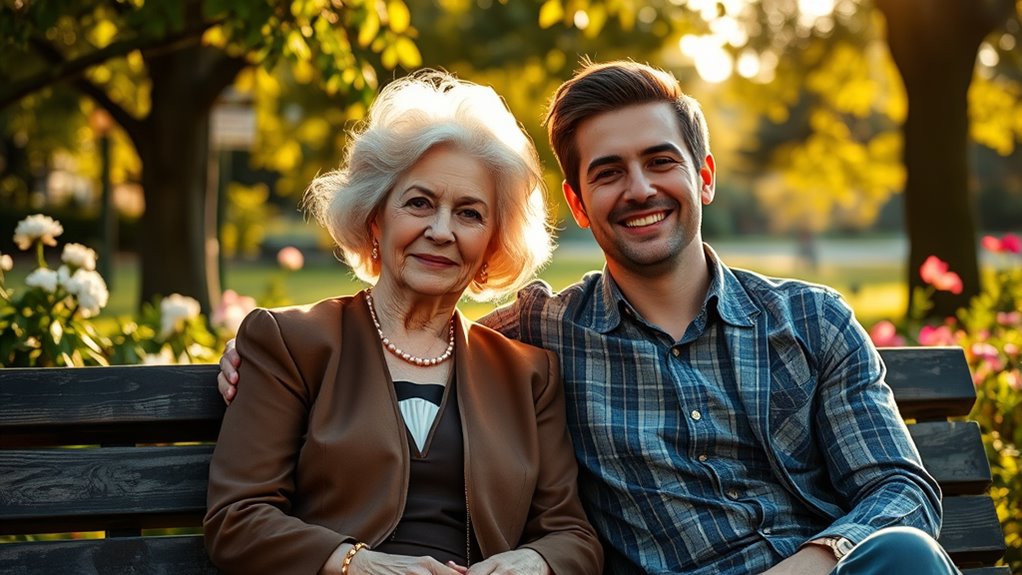
Age differences in relationships can bring both unique challenges and rewarding experiences. When there’s a significant age gap, you might find that the generational gap influences your connection in ways you hadn’t anticipated. It can affect your values, communication styles, and even your outlook on life. One of the primary hurdles is steering through differences in maturity levels. You may notice that one of you is more emotionally seasoned, while the other is still exploring or figuring things out. This disparity can sometimes lead to misunderstandings or feelings of being out of sync, especially if you’re at different stages of personal growth.
Differences in maturity can lead to misunderstandings in age-gap relationships.
The generational gap often extends beyond just age; it shapes your perspectives on social issues, technology, and cultural references. For example, you might have grown up in vastly different environments, making it harder to find common ground on certain topics. This can lead to feelings of disconnect if you’re not mindful of each other’s backgrounds. It’s essential to acknowledge these differences openly and respect each other’s experiences. Being aware of these gaps helps prevent assumptions that one person is more mature or knowledgeable simply because of their age. Instead, focus on understanding that maturity isn’t solely tied to age but also to life experiences and personal development.
You might also encounter challenges related to future planning. One partner could be thinking about retirement, while the other is just starting their career. These contrasting priorities can cause tension if you’re not clear about your goals and expectations early on. Communication becomes pivotal here; talking honestly about your visions for the future ensures you’re both on the same page. It’s also important to recognize that societal opinions might cast your relationship in a negative light, often fueled by misconceptions about age-gap romances or sugar relationships. This external pressure can strain your connection, so it’s vital to support each other and stay true to your feelings.
Despite these challenges, many age-gap couples find their differences enrich their relationship. The mature partner can offer wisdom and stability, while the younger partner brings energy and new perspectives. The key lies in mutual respect, patience, and understanding. By acknowledging that the generational gap and maturity levels are just parts of your unique relationship, you can turn potential obstacles into opportunities for growth. Ultimately, successful age-difference relationships require effort, open-mindedness, and a willingness to appreciate what each person brings to the table, proving that love can transcend age when approached with honesty and respect.
Frequently Asked Questions
How Does Societal Perception Influence Age-Gap Relationships?
Societal perception shapes how you view age-gap relationships by influencing acceptance and creating stereotypes. You might face stereotype challenges that question the legitimacy or motives behind such relationships, impacting your confidence or choices. When society is more accepting, you feel freer to pursue your relationship without fear of judgment. Ultimately, societal attitudes can either reinforce stigma or foster understanding, affecting your experience and openness in age-gap relationships.
Are There Legal Considerations Specific to Age-Disparate Relationships?
When it comes to legal considerations in age-disparate relationships, you gotta watch out for potential pitfalls. Legal implications can include age of consent laws, age discrimination, and marriage regulations that vary by jurisdiction. While society might turn a blind eye, you should stay informed to avoid issues, especially if the age gap is significant. Knowledge is power, and understanding these rules helps you navigate your relationship safely and legally.
How Do Family Members Typically React to Significant Age Differences?
Family members often react with mixed feelings to significant age differences, influenced by the generational gap. You might face challenges in gaining family acceptance, especially if their values or expectations clash with your relationship. Some may be supportive, while others express concern or disapproval. It’s important to communicate openly, address their worries, and demonstrate your commitment, helping bridge the gap and foster understanding despite initial reactions.
What Psychological Effects Can Age Gaps Have on Partners?
You might find that age gaps create a whirlwind of psychological effects, like intense emotional maturity differences and shifting power dynamics. These factors can make you feel like you’re on an emotional rollercoaster, constantly adjusting to each other’s growth. Sometimes, the older partner might feel a sense of control, while the younger one seeks validation. Recognizing these dynamics helps you navigate the relationship more mindfully and fosters mutual understanding.
How Do Age Differences Impact Long-Term Relationship Satisfaction?
Age differences can influence long-term relationship satisfaction by affecting emotional compatibility and life stage alignment. You might find that shared goals and maturity levels impact your connection. When you’re at similar life stages, communication and understanding tend to improve, boosting satisfaction. Conversely, mismatched ages can pose challenges, but with effort, you can navigate these differences by focusing on emotional bonds and respecting each other’s life experiences.
Conclusion
So, as you see, age difference in relationships is often misunderstood—what’s myth and what’s reality blend together like a chance encounter. You might find that the challenges you face aren’t always about years but about connection, trust, and understanding. Sometimes, life throws us surprises, and love finds its way despite the odds. Ultimately, whether ages align or differ, it’s the genuine bond that truly makes it work—another coincidence that shapes your unique story.