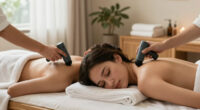
Couples comparing massage devices are usually choosing between a shared, hands-free setup and two tools they operate separately. Wearable couples massage devices can make it easier to relax together without holding equipment, but their fit and massage patterns may suit one body better than another. Two handheld massagers take more effort to use, yet each person can choose where to massage and how much pressure to apply. The right choice depends less on the word “couples” on the box than on whether you value convenience and coordination or personal control and flexibility.
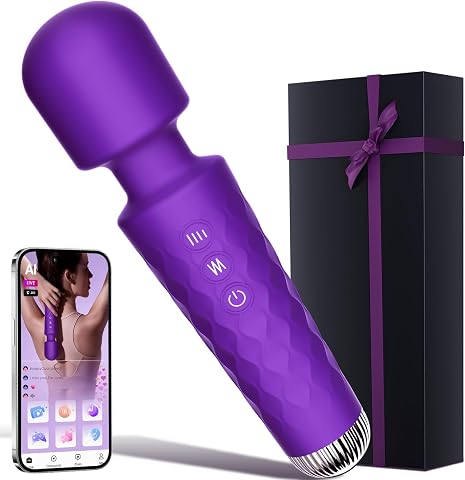
Handheld Cordless Personal Massager with APP Control and 360° Flexible Head
- ✔ Control: App control and physical buttons
- ✔ Vibration modes: 10
- ✔ Battery life: Up to 90 minutes

Premium Silicone Rose Black Handheld Massager – 20 Vibration Modes
- ✔ Dimensions: 6 × 1.42 inches
- ✔ Weight: 4 oz (114 g)
- ✔ Vibration modes: 20

Mini Massager Waterproof 10 Vibration (Gray Purple)
- ✔ Water resistance: Yes; rating not specified
- ✔ Charging method: USB
- ✔ Charging time: 2 hours
At a Glance
| Criteria | Wearable couples massage devices | Two handheld massage devices | Winner |
|---|---|---|---|
| Hands-free use | Designed to stay in place during use; hands are free | Both users hold or position their own device | A |
| Control over pressure and placement | Often limited to preset patterns or fixed contact areas | Each person adjusts location, pressure, and timing | B |
| Fit for different bodies | Fit and contact can vary by body shape and size | Flexible because users position devices independently | B |
| Ease of setup | One device or matched set to position and adjust | Requires two devices and some coordination | A |
| Use beyond couples sessions | May be less useful for solo or targeted massage | Useful for solo massage and other body areas | B |
| Cleaning and upkeep | Fewer separate handheld surfaces, but wearable areas need cleaning | Two devices and their attachments may need cleaning | Depends |
| Value | Worth a premium when hands-free shared use is the priority | Often better value when flexibility and individual control matter | Depends |
Handheld Cordless Personal Massager with APP Control and 360° Flexible Head
For couples who want to adjust positioning as well as vibration, this model has the most versatile setup in the lineup. Its 360° flexible head is designed to reach the neck, shoulders, and back, so partners can change the angle without relying on the compact, fixed form of the rose massager or mini. That physical flexibility gives it a distinct advantage when one partner is guiding use on another person or when both want to find a comfortable position.The control mix also suits shared use: 10 vibration modes and app-based intensity adjustment make it possible to explore settings remotely, while physical buttons provide a direct option on the device. Bluetooth app control may feel convenient for partners taking turns, but it adds a phone and connection to the routine. Buyers who want a completely standalone device may prefer the rose model’s extensive on-device customization. Its stated 90-minute cordless runtime supports longer sessions between charges, and IPX6 water resistance is described as making rinsing and cleaning easier. The tradeoffs are app dependence for remote features and silicone that may collect lint or dust. It is the most adaptable pick, though its added controls may be unnecessary for couples who simply want a quiet, travel-sized massager.
Pros:
- A 360° flexible head is designed to reach the neck, shoulders, and back.
- App control supports remote operation and customizable intensity.
- Physical buttons offer a non-app control option.
- IPX6 water resistance and up to 90 minutes of cordless use are specified.
Cons:
- Remote app features depend on Bluetooth connectivity and may be inconvenient for app-averse users.
- Soft silicone may attract lint or dust over time.
Best for: Couples who want an adjustable head, remote app control, and multiple ways to manage a shared massage.
Not ideal for: Partners who prefer a simple, standalone device without Bluetooth or app setup, or who want the smallest, lightest option.
Bottom line: We recommend this as the most versatile couples pick for partners who value flexible positioning and shared remote adjustments.
“We recommend this as the most versatile couples pick for partners who value flexible positioning and shared remote adjustments.”
Premium Silicone Rose Black Handheld Massager – 20 Vibration Modes
Couples who want a wide selection of settings without depending on an app may prefer this compact silicone massager. It offers 20 vibration patterns and eight intensity levels, the largest stated selection in this group. That range gives partners more room to compare gentle and stronger settings and settle on a preference; by contrast, the mini has only one vibration setting, and the app model lists 10 modes. The rose model’s customization is therefore its defining strength, especially for couples who like to adjust settings directly.At 6 inches long and 4 ounces, it is also easy to pack and handle. Its IPX7 water-resistance rating and soft, body-safe silicone are listed as useful for cleaning and comfortable contact, although the description specifically cautions against prolonged submersion. This is not the pick for people who need an angled head to reach difficult areas: unlike the app-controlled model, the product information does not describe a flexible head or remote operation. Charging brings smaller annoyances, too. The bottom charging hole may be hard to locate, and a power adapter is not included. We see it as the better fit for tactile, on-device choice rather than couples who prioritize articulated reach or app-based sharing.
Pros:
- Twenty vibration modes and eight intensity levels provide the broadest stated customization.
- Compact 6-inch design weighs 4 ounces and is easy to carry.
- Soft silicone is described as body-safe and gentle on skin.
- IPX7 water resistance supports cleaning, subject to the submersion limitation.
Cons:
- The small bottom charging port may be difficult to locate.
- A power adapter is not included, and prolonged submersion is not recommended.
Best for: Couples who want many vibration and intensity combinations in a small device with direct, on-device adjustment.
Not ideal for: Partners who need a flexible head or remote app operation, or those who expect water resistance to mean prolonged submersion is safe.
Bottom line: We’d choose this for couples who want the most on-device setting variety in a compact form, while accepting less reach flexibility than the app-controlled model.
“We’d choose this for couples who want the most on-device setting variety in a compact form, while accepting less reach flexibility than the app-controlled model.”
Mini Massager Waterproof 10 Vibration (Gray Purple)
This mini massager is the straightforward choice for couples who care most about portability and quiet operation. Its under-50 dB noise level is a useful stated distinction from the other two devices, whose descriptions do not provide noise figures. Compact and lightweight construction also makes it easier to carry than a larger handheld device, and the two-hour USB charge gives buyers a clear charging time rather than an unspecified one. For travel or simple daily use, those practical details may matter more than a long menu of modes.The main compromise is significant for shared use: despite the product name referring to 10 vibrations, the supplied description says it is limited to a single vibration setting with no intensity adjustment. Couples who want to take turns finding a preferred level will have fewer options here than with the rose model’s 20 modes and eight intensities or the app-controlled model’s 10 modes and adjustable intensity. Water resistance and easy cleaning are listed, and the one-year warranty is specified, but the description does not state a water-resistance rating. We would choose this when small size, quiet operation, and quick charging lead the decision. We would skip it if partners want varied patterns or fine control.
Pros:
- Compact and lightweight for travel.
- Noise level is specified as under 50 dB.
- USB charging takes two hours.
- Water-resistant design is described as easy to clean, with a one-year warranty.
Cons:
- The description says it has a single vibration setting and no intensity adjustment.
- No specific water-resistance rating is provided.
Best for: Couples who prioritize a compact travel device, low stated noise, easy cleaning, and a specified charging time.
Not ideal for: Partners who want adjustable intensity or multiple ways to tailor vibration during shared use.
Bottom line: We recommend this mini option for quiet, portable simplicity, but couples seeking customizable shared settings should choose one of the other two.
“We recommend this mini option for quiet, portable simplicity, but couples seeking customizable shared settings should choose one of the other two.”
As an Amazon Associate we earn from qualifying purchases.
Key Differences
The central tradeoff is convenience against control. A wearable device can reduce the work of holding and guiding a massager, making a shared session feel simpler. That advantage depends on a secure, comfortable fit and contact that works for both people. If either partner needs a different position or pressure, a fixed setup may feel less personal.
Handheld devices ask more of each user, but that effort buys flexibility. Each person can move the device, change pressure, or stop without changing the other person’s experience. They also make sense outside shared sessions, which can improve their value. For buyers who mainly want a hands-free shared routine, the wearable format has a clear use case; for everyone else, paired handhelds are the safer all-purpose choice.
Detailed Comparison
Hands-free use (Wearable couples massage devices wins — moderate)
Wearable devices win by design: once positioned, they can let both partners relax without gripping a handle. This is a moderate advantage for people who find holding a massager tiring or want a more coordinated session. Handheld devices require each user to keep positioning and guiding their own unit, though that can be manageable for short sessions.
Control over pressure and placement (Two handheld massage devices wins — major)
Two handheld devices win clearly. Each person can target a different area, choose a comfortable pressure, and adjust as the session goes on. Wearable devices may have fixed contact points or limited settings, so the experience can be less tailored. This is a major difference for partners with different sensitivities or massage preferences.
Fit for different bodies (Two handheld massage devices wins — moderate)
Handhelds are more adaptable because each user chooses where and how to hold the device. A wearable setup can suit both people when its fit and contact areas align with their bodies, but that is harder to predict from a product description alone. The gap is moderate: check sizing, adjustment options, and return terms before buying a wearable device.
Ease of setup (Wearable couples massage devices wins — minor)
A wearable device can be simpler once adjusted because it leaves hands free and may keep the session coordinated. Handhelds need two people to position their own devices and may take more movement during use. This is a minor-to-moderate convenience win for A, especially when the wearable product is easy to adjust and secure.
Use beyond couples sessions (Two handheld massage devices wins — moderate)
Handheld devices win because either unit can be used alone and moved to other areas of the body, subject to the manufacturer’s instructions. A wearable couples device may still be useful solo, but its shape and intended placement can limit versatility. The difference is moderate for buyers who want one purchase to serve several routines.
Cleaning and upkeep (minor difference)
There is no universal winner. A wearable may have fewer separate devices to manage, but its body-contact surfaces, straps, or fabric still need care. Handheld sets mean cleaning two units and any attachments, though smooth, removable parts may be straightforward to maintain. Compare the stated cleaning instructions and materials for the exact models before deciding.
Value (major difference)
Value depends on whether hands-free use is worth a higher price. A wearable device earns its premium for couples who will use that shared format often and find it comfortable. Paired handhelds usually make more sense for buyers who want individual control, solo use, or broader massage options. This is a major purchase decision: pay more for the wearable format only when its specific convenience solves a real need.
Wearable couples massage devices: Pros and Cons
Pros:
- Hands-free use can make relaxing together easier
- May provide a coordinated, shared experience
- Can reduce the need to hold or guide a massager
Cons:
- Fit and contact may not suit both partners equally
- Less freedom to choose pressure and placement
- May offer less value for solo or varied use
Two handheld massage devices: Pros and Cons
Pros:
- Each person controls placement, pressure, and timing
- Adaptable to different preferences and body areas
- Can be used separately as well as together
Cons:
- Both users must hold or position a device
- Takes more coordination during a shared session
- Two units and accessories may add upkeep
Who Should Choose What
Choose Wearable couples massage devices if:
- You both want a hands-free session and the device fits comfortably.
- You expect to use the shared format often enough to justify a possible price premium.
- Your massage preferences and preferred contact areas are similar.
Choose Two handheld massage devices if:
- You and your partner prefer different pressure levels or target areas.
- You want devices that work for solo massage as well as shared use.
- You are uncertain whether a wearable design will fit your bodies comfortably.
Skip both if: Neither format suits you if you need a specialized therapeutic treatment, have a condition that makes massage unsuitable, or cannot find a product with clear fit, use, and cleaning guidance. Ask a qualified health professional about medical concerns.
Value for Money
A higher price for a wearable device is justified when hands-free use is the main reason you are buying and both partners are comfortable with its fit. If you expect to use it regularly in that specific way, the added convenience may matter more than broader versatility. If you mainly want an effective massager for differing needs, paired handheld devices usually offer better value because they give each person direct control and remain useful when the other partner is not participating. Compare the actual features, included accessories, warranty, and care instructions: “couples” labeling alone does not justify paying more.
Final Verdict
For most couples, two handheld massage devices are the better starting choice. They handle different comfort levels, offer more freedom over placement, and remain useful for solo sessions. Choose a wearable couples device when hands-free, coordinated use is a priority for both people and the fit is right. The deciding factor is whether you value convenience enough to accept less individual control; if not, choose the handheld pair.
Frequently Asked Questions
Are wearable couples massage devices better than two handheld massagers?
They are better for hands-free shared use, while handhelds are better for individual control and flexibility. For most buyers who want varied or solo use, handheld devices are the more versatile choice.
Is a couples massage device worth paying more for?
Pay more when its hands-free design is comfortable for both partners and you expect to use that format often. Otherwise, paired handhelds are likely to provide better value through independent control and broader use.
Can two handheld massagers be used at the same time?
That depends on the devices and their instructions. Check each product’s guidance and use them only in the intended way; either partner should be able to adjust or stop comfortably.
What should we check before buying a wearable couples massager?
Review the fit range, adjustment method, contact areas, intensity options, cleaning instructions, warranty, and return policy. A design that does not fit both people comfortably can erase its convenience advantage.