

Maintaining routines gives your child a sense of security that boosts their emotional stability and confidence. Consistent rituals create a predictable environment, providing reassurance during stressful times. When routines become habits, they help children feel cared for and supported, reducing anxiety. This stability also fosters self-control and resilience, helping your child navigate change with greater ease. Keep exploring to discover how these routines can build a stronger, more confident foundation for your child’s growth.
Key Takeaways
- Consistent routines provide children with a predictable environment, reducing anxiety and fostering emotional stability.
- Maintaining rituals teaches dependability, helping children feel secure and confident in their daily lives.
- Regular routines reinforce a sense of being cared for, strengthening trust and emotional bonds.
- Consistency in activities supports self-control and responsible behavior development.
- Stable rituals build resilience, enabling children to adapt better to changes and challenges.
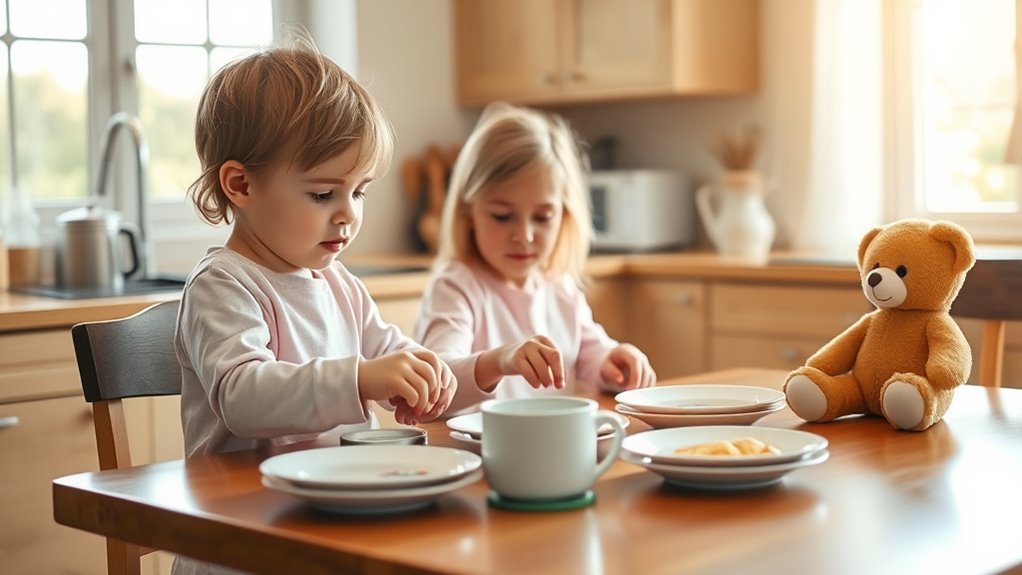
Have you ever wondered why some routines feel more meaningful than others? It’s often because they provide a sense of emotional stability. When you maintain consistent rituals, especially for children, you help create a predictable environment that fosters security. These routines act as anchors in daily life, giving children a sense of control amid the chaos and change that can sometimes feel overwhelming. The key lies in habit formation; by repeatedly engaging in certain activities at specific times, these routines become ingrained in a child’s mind, offering reassurance and comfort. When routines become habits, they transform from mere actions into reliable parts of everyday life, reducing anxiety and helping children feel more grounded.
Consistent routines build emotional stability and security for children through habit formation and predictable daily anchors.
As you establish routines, you’re essentially teaching your child that certain activities are dependable. This consistency builds a foundation of emotional stability, making it easier for kids to navigate new or stressful situations. When they know what to expect, they gain confidence and resilience. For example, a regular bedtime ritual—reading a story, singing a song, or saying goodnight—becomes a familiar pattern that signals the end of the day. Over time, this routine not only helps them fall asleep more easily but also reinforces a sense of safety. When children associate these rituals with comfort, they internalize the idea that they are cared for and protected, which is vital for their emotional development. Developing consistent routines can also promote better behavioral regulation and self-control over time.
Moreover, habit formation through routines isn’t just about comfort; it also teaches discipline and responsibility. When you stick to a schedule, children learn the importance of consistency and follow-through. This can translate into better self-control and time management skills as they grow older. It’s important to recognize that routines don’t have to be rigid—they can be flexible enough to adapt to changing needs while still providing a stable framework. This balance ensures that children don’t feel trapped but instead see routines as a dependable part of their world.
Ultimately, maintaining rituals is about more than just creating order; it’s about nurturing emotional well-being. When routines become habits, they build a sense of trust, safety, and predictability. As a parent or caregiver, your consistency reassures children that they are supported and loved, which lays the groundwork for healthy emotional development. By understanding the importance of habit formation and emotional stability, you can help your child grow into a resilient, confident individual who feels secure in their daily environment.

Bedtime for Frances: A Cozy Classic About a Badger's Funny Sleep Ritual for Kids (Ages 4-8)
As an affiliate, we earn on qualifying purchases.
As an affiliate, we earn on qualifying purchases.
Frequently Asked Questions
How Do Rituals Differ Across Various Cultures?
You might notice that rituals vary widely across cultures, reflecting unique beliefs and values. Cultural traditions and celebratory customs shape these rituals, creating a sense of identity and community. For example, some cultures emphasize elaborate ceremonies, while others focus on simpler, meaningful practices. By understanding these differences, you can appreciate how rituals foster connections and provide stability, helping children feel secure and grounded in their cultural heritage.
Can Too Many Rituals Overwhelm Children?
You might wonder if too many rituals overwhelm children. While rituals provide stability, excessive ritual complexity or overly rigid routines can cause stress. It’s important to maintain a balance, ensuring rituals are meaningful and age-appropriate. Your parental involvement plays a key role—by being flexible and attentive, you help children feel secure without feeling overwhelmed. Focus on quality rather than quantity to foster a sense of safety and predictability.
What if a Family Can’t Maintain Consistent Rituals?
Imagine a boat needing steady oars to stay afloat. If your family can’t keep consistent routines, it’s okay—flexibility still offers emotional stability. You can adapt by creating new family routines or simple rituals that fit your current situation. Consistency is important, but it’s equally essential to provide children with love, reassurance, and a sense of security, even if your family routines shift temporarily.
How Do Rituals Adapt During Major Life Changes?
During major life changes, you can adapt rituals to maintain emotional stability for your children. Keep routine flexibility by modifying activities or timing, ensuring familiarity persists even if specifics change. This approach helps children feel secure and supported, reducing anxiety. You might introduce new traditions gradually or tweak existing ones, showing them that stability isn’t about perfection but about providing consistent reassurance amidst life’s shifts.
Are Digital Rituals Effective for Children’s Security?
Digital routines can offer children a sense of security if they’re consistent and predictable. You should establish clear online security measures and incorporate daily digital rituals, like checking in after school or setting screen time limits. These routines help children feel safe and foster trust. Remember, maintaining stability in digital habits reassures kids, making them more comfortable steering through the online world confidently and securely.

SpielLieb® Montessori Tagesplaner Kinder Routine – Magnettafel inkl. 166 Magneten, beschreib- & abwischbar Tagesplan Kinder Lernhilfe für Routinen & Struktur Routine Planer Kinder – Tagesplaner Kinder
⏰ FÖRDERT SELBSTSTÄNDIGKEIT: Der Montessori Tagesplaner Kinder Routine hilft, Selbstständigkeit & Verantwortungsbewusstsein spielerisch zu entwickeln. Idealer Kinder Tagesplaner…
As an affiliate, we earn on qualifying purchases.
As an affiliate, we earn on qualifying purchases.
Conclusion
By keeping consistent routines, you give your children a sense of stability and security they need to thrive. Studies show that children with daily rituals are 25% more likely to feel confident and less anxious. When you stick to familiar routines, you’re not just creating order—you’re fostering trust and emotional resilience. So, stay committed to those rituals; they’re the foundation that helps your kids face the world with confidence and calm.

Bunny Stuffed Animal – Soother Bunny, Soothing Toys for, Soother Doll Washable Calming Security Toy | for Babyy Birthday Nursery Girls
Gentle Sleep Supporter: Delivers a calming experience with its plush, skin-friendly surfaces that aids in easing emotional stress…
As an affiliate, we earn on qualifying purchases.
As an affiliate, we earn on qualifying purchases.

Habit Tracker: Track Your Habits For 5 Years, Achieve All Your Goals And Live Your Best Life.
Kopien doppelt eines Zeilenabstand von 5 mm
As an affiliate, we earn on qualifying purchases.
As an affiliate, we earn on qualifying purchases.