
TL;DR
The Gottman Institute’s article says a partner seeming emotionally unavailable does not, by itself, establish why they are withdrawn or whether they are unwilling to connect. Drawing on research about couples’ everyday interactions, it describes small bids for attention, supportive listening and breaks during heated conflict as ways to understand and address disconnection.
The Gottman Institute’s guidance on emotional unavailability argues that a partner’s quietness or distracted response is not enough to explain what is happening in a relationship. Drawing on research into couples’ daily interactions, the article says small attempts to connect—and how partners respond—can offer a more useful way to understand emotional distance than a label alone.
The Institute describes a “bid” as a small attempt to connect, such as pointing out a boat outside a window. In the example, one partner responds by recalling a schooner they saw together, a response the article calls turning towards. The exchange is ordinary rather than dramatic, but the Institute presents it as an example of attention and shared engagement.
The article reports that, during a six-year follow-up of newlyweds, couples who remained married turned toward each other’s bids 86% of the time, compared with 33% among couples who divorced. Those figures describe the study’s groups and follow-up; they do not establish that any single response determines a couple’s outcome. The Institute also discusses a 2004 study of 49 newlywed couples, in which interaction at dinner was associated with the humor and affection they showed during a later argument. The source describes those findings as correlational.
In a counseling example, Carrie says Jeff does not share his inner life. When he begins describing stress at a volunteer job, Carrie advises him to quit; he stops talking. Asked to try again without giving advice, she instead asks what made the person at work so difficult. Jeff then opens up. The article connects this change to a stress-reducing conversation and the principle that understanding should come before advice.
Small Responses Shape Daily Connection
The guidance matters because the phrase “emotionally unavailable” can describe very different situations, from habitual inattention to a partner temporarily shutting down during conflict. Treating every quiet moment as evidence of indifference risks overlooking stress, misunderstanding or an interaction pattern both people contribute to. The Institute’s approach shifts attention to observable exchanges: whether someone notices a bid, responds with interest, or leaves the other person feeling unseen.
That distinction does not mean one partner must excuse persistent neglect or take responsibility for both people’s communication. Rather, the article offers ways to make the issue more specific: identify what happened, describe the effect, and ask for a clear response. A request such as “I feel alone when we only talk about logistics; I need us to spend some time talking” is more actionable than a global accusation. The source presents these as relationship practices, not as a diagnosis or guarantee that a relationship will improve.

Couples Communication Workbook: 20 Minutes a Day for 12 Days to Improve Listening, Resolve Conflicts, and Strengthen Your Relationship (Relationship Skills Series)
As an affiliate, we earn on qualifying purchases.
As an affiliate, we earn on qualifying purchases.
How the Institute Frames Connection
The article says Gottman and colleagues did not define the everyday phrase “emotionally unavailable.” Their research instead examined what partners do in ordinary moments. A bid may be a comment, a question or a request for attention; turning towards means responding to it rather than ignoring or dismissing it. The article says U.S. searches for the phrase more than doubled over five years, but supplies no underlying search data, dates or comparison method in the material provided, so that figure cannot be independently assessed here.
The source also distinguishes silence during an argument from broader emotional distance. It describes flooding as a state of intense physiological arousal in which a productive conversation can become difficult. The article cites heart rates above 100 beats per minute, sometimes reaching 165, and recommends taking a break of at least 20 minutes, while telling the other person that a break is coming. This is presented as the Institute’s conflict-management guidance, not a clinical assessment of an individual partner.
““Out of mindlessness, not malice.””
— The Gottman Institute article, describing Gottman’s view
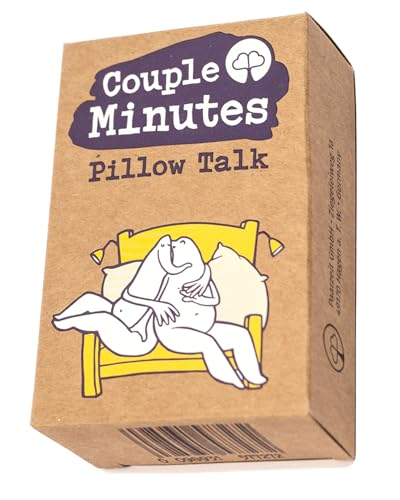
Paarzeit 53 Playful Conversation Starters for Couples – CoupleMinutes Pillow Talk – Gift for Women, Men and Parents, a question Game on the topics of Intimacy and emotional Connection (C) Pillow Talk
- Number of Conversation Cards: 53 cards for couples
- Versatile Use: Perfect for home or travel
- Inclusive Content: Suitable for all couples
As an affiliate, we earn on qualifying purchases.
As an affiliate, we earn on qualifying purchases.
What the Label Cannot Explain
The article does not establish why a particular person seems withdrawn, whether the behavior is temporary or persistent, or whether both partners interpret the same interaction similarly. Its research findings describe groups of couples and cannot predict an individual relationship’s future. The source also does not provide the full methods or data for every study it cites, and its search-trend claim is not accompanied by a baseline or measurement details in the supplied material.
Nor does the article offer a clinical test for emotional unavailability. A person’s silence could reflect conflict-related flooding, stress, reluctance to share, or another circumstance; the material does not determine which explanation applies in any specific relationship. The guidance should not be read as evidence that a partner’s concerns are unfounded or that communication techniques alone will resolve serious or ongoing problems.

Fun Hip Practice Set Für Männer Und Frauen, Komfortable Berührung, Paar Haus Reiseset (6 Stück) – Q (Schwarz)
- Ergonomisches Design: Anatomisch geformt für Komfort
- Weiche, hautfreundliche Materialien: Warm und angenehm auf der Haut
- Verschiedene niedliche Stile: Vielfältige Designs für Spaß und Abwechslung
As an affiliate, we earn on qualifying purchases.
As an affiliate, we earn on qualifying purchases.
Try a Clear, Low-Blame Request
The Institute’s suggested next step is to describe a specific moment and make a direct request without blame. Its “softened start-up” formula uses “I feel,” identifies the situation, and states “I need.” A partner can also ask whether the other person wants listening or advice, then reflect what they heard before responding. During a heated argument, the article recommends communicating that a break is needed and agreeing to return to the discussion after at least 20 minutes.
The source also emphasizes noticing and responding to small bids in everyday life, including a comment, a practical request or a sign of frustration. It gives a laundry example in which a complaint about folding becomes an opportunity to ask what is wrong and share the task. Whether these steps change a relationship is unknown; the article offers them as practices, not a promised outcome. It does not specify a follow-up study or reporting milestone.

Couples Conflict Resolution Workbook: Stop Fighting. Communicate Better. Solve Problems as a Team. (Relationship Skills Series)
As an affiliate, we earn on qualifying purchases.
As an affiliate, we earn on qualifying purchases.
Key Questions
What does emotionally unavailable mean in this article?
It describes someone who seems unwilling or unable to share feelings or respond to a partner’s feelings. The Gottman Institute says its research does not formally define the phrase.
Does a quiet response prove a partner does not care?
No. The article says a withdrawn response can have different explanations, including distraction or intense arousal during conflict. A single interaction does not establish a partner’s motives.
What is a bid for connection?
A bid is a small attempt to connect, such as sharing an observation or asking for attention. Turning towards means acknowledging or responding to that attempt.
What can someone say to raise the issue?
The Institute recommends a softened start-up: describe how you feel, name the situation and make a clear request without blame. For example, someone might say they feel disconnected when conversations stay focused on logistics and ask for time to talk.
Why does the article recommend a break during an argument?
It says intense physiological arousal, which it calls flooding, can make productive discussion difficult. Its guidance is to take at least 20 minutes and tell the other person a break is coming.
Source: rss