To prevent sibling rivalry after divorce, create a safe emotional space where your children feel heard and validated. Maintain open, consistent communication and set clear boundaries for respectful behavior. Encourage positive interactions through shared activities and teach conflict resolution skills like active listening and “I” statements. Spend quality one-on-one time with each child to reinforce their individual importance. If you want to discover more ways to foster harmony, you’ll find helpful tips ahead.
Key Takeaways
- Maintain consistent communication and reassurance to address feelings of insecurity and reduce rivalry.
- Spend individual quality time with each child to reinforce their unique value and prevent jealousy.
- Establish clear boundaries for respectful behavior and conflict resolution to promote harmony.
- Encourage cooperative activities that foster sibling bonding and teamwork.
- Model healthy conflict resolution and validate emotions to create a safe environment for expressing feelings.
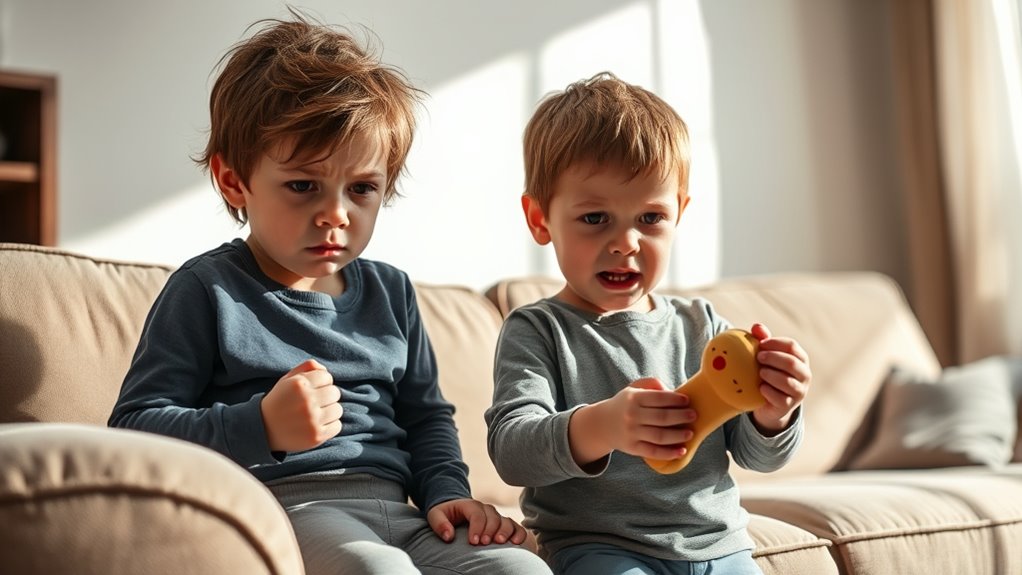
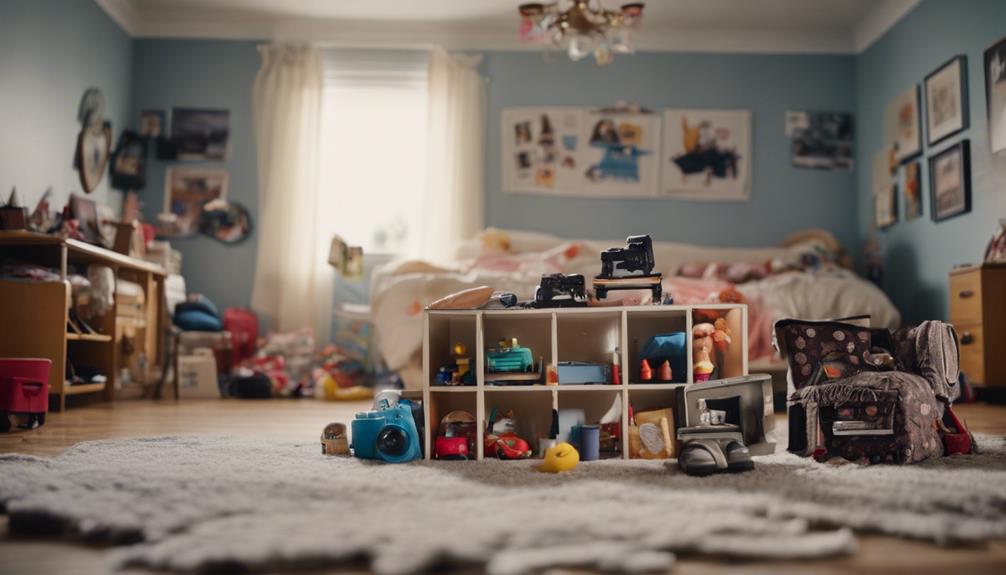
Divorce can considerably change family dynamics, often leading to increased sibling rivalry. When your family goes through such a significant upheaval, it’s natural for your children to experience a wide range of emotions—confusion, anger, sadness—that can heighten tensions between siblings. The emotional impact of divorce can make conflicts more intense and frequent, as kids struggle to navigate their feelings while adjusting to new living arrangements and parental roles. To help your children cope and prevent rivalry from spiraling out of control, focusing on effective conflict resolution becomes essential.
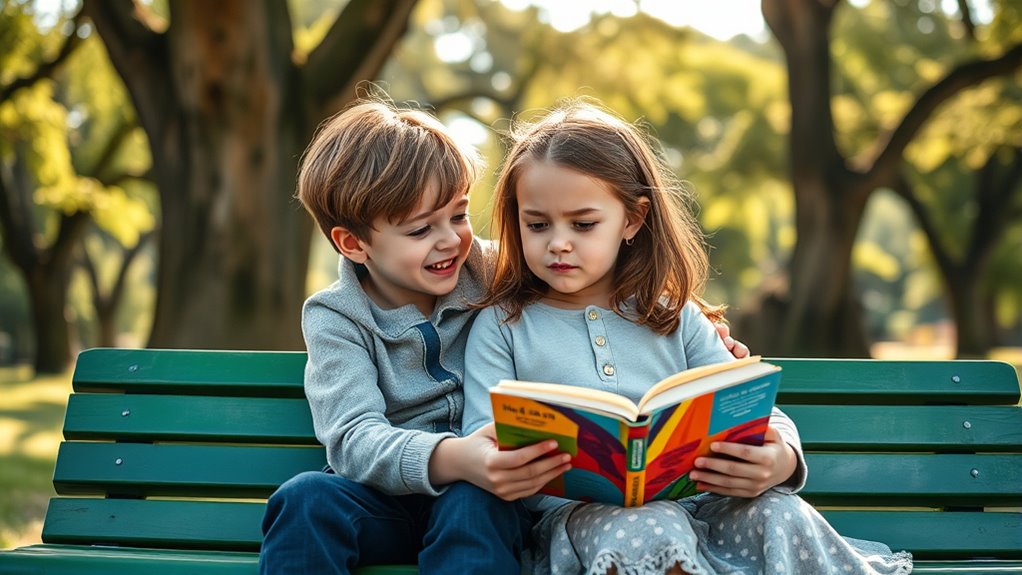
One of the most important steps is to create an environment where your kids feel safe discussing their feelings openly. Encourage them to express their emotions without fear of judgment or dismissal. Validating their feelings helps reduce frustration and prevents misunderstandings that can escalate sibling conflicts. As a parent, your role is to model healthy conflict resolution strategies—stay calm, listen actively, and avoid taking sides. When disputes arise, guide your children to find peaceful solutions on their own, emphasizing cooperation instead of competition. This approach teaches them that disagreements are normal but can be managed constructively.
Create a safe space for children to express feelings and model calm, cooperative conflict resolution.
Consistent communication between you and your children is key. Keep lines of dialogue open, and check in regularly to understand what’s bothering them. When children feel heard and supported, they are less likely to lash out at their siblings out of frustration or insecurity. Additionally, establishing clear boundaries and expectations around respectful behavior can help reduce the emotional impact of rivalry. Make sure your children know that name-calling, teasing, or physical aggression are unacceptable, and reinforce this message consistently.
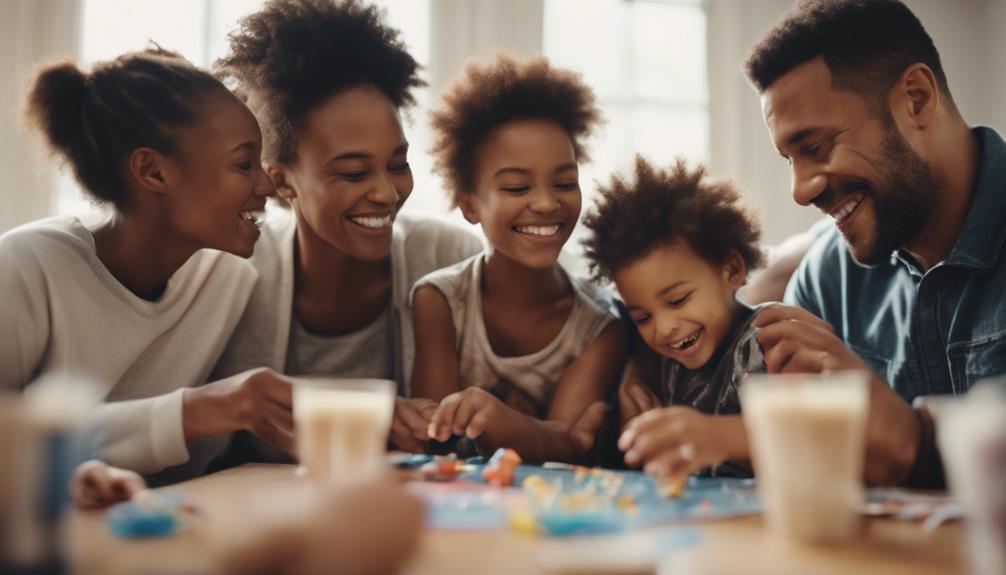
Furthermore, fostering positive sibling interactions can serve as a buffer against rivalry. Encourage shared activities that promote teamwork and bonding, such as games, joint projects, or family outings. These experiences help siblings develop a sense of camaraderie and mutual support, which can counteract feelings of competition or resentment. It’s also essential to keep individual attention balanced; children often feel neglected or less important after divorce, so spend quality time with each child separately when possible. This personalized attention reassures them of their unique value within the family. Incorporating appropriate conflict management strategies, such as teaching children to use “I” statements and active listening, can further enhance their ability to resolve disagreements peacefully.

Help Your Dragon Resolve Conflict: A Children's Story About Conflict Resolution (My Dragon Books, Band 63)
As an affiliate, we earn on qualifying purchases.
As an affiliate, we earn on qualifying purchases.
Frequently Asked Questions
How Can I Tell if Sibling Rivalry Is Worsening After Divorce?
You can tell if sibling rivalry is worsening after divorce by observing increased arguments, jealousy, or resentment between your kids. Pay attention to how they communicate, and if conflicts become more frequent or intense. Improving parent communication and teaching conflict resolution skills can help. If tensions persist despite your efforts, it might be time to seek additional support to address underlying issues and prevent further escalation.
Are There Specific Age Groups More Prone to Rivalry Post-Divorce?
Did you know that children aged 6 to 12 are more prone to sibling rivalry after divorce? During this age, developmental stages create unique age-related dynamics, making conflicts more common as they navigate loyalty and emotional changes. As a parent, recognizing these patterns helps you support healthy sibling relationships by fostering open communication and understanding, easing the progression through different developmental stages and reducing rivalry.
What Signs Indicate a Child Is Struggling Emotionally From Sibling Rivalry?
If you’re wondering how to tell if a child is struggling emotionally from sibling rivalry, look for emotional signs like withdrawal, sadness, or increased irritability. Behavioral indicators include frequent conflicts, acting out, or avoiding family interactions. These signs suggest your child might be overwhelmed or hurt by rivalry. Pay close attention, offer reassurance, and create opportunities for open conversations to help them process their feelings effectively.
How Does Remarriage Impact Sibling Rivalry Among Children?
Remarriage can intensify sibling rivalry, creating a new layer of step family dynamics. You might notice children feeling torn between loyalty and jealousy, especially when parental involvement varies. While blending families offers love and growth, it also requires patience. Your active engagement helps prevent conflicts, fostering understanding. Recognizing these shifts allows you to support healthier relationships, ensuring siblings build bonds rather than compete for attention amid the changes.
Can Sibling Rivalry After Divorce Affect Children’S Long-Term Relationships?
Sibling rivalry after divorce can influence your children’s long-term relationships, especially if parental conflict persists or step sibling dynamics remain tense. You might notice ongoing jealousy or competition that shapes how they interact with others later in life. By managing conflicts calmly and fostering positive relationships between step siblings, you help your children develop healthier social skills, reducing the risk of long-term relationship issues rooted in their childhood experiences.

Big Brother, Little Sister – Bonding Coloring Book: Sibling Love: Moments to Color (Sibling Coloring Books)
As an affiliate, we earn on qualifying purchases.
As an affiliate, we earn on qualifying purchases.
Conclusion
Remember, sibling rivalry after divorce is like a storm cloud crossing a clear sky—temporary and passing. By fostering open communication, showing equal love, and setting clear boundaries, you’re planting seeds of harmony that can bloom into lasting peace. Think of yourself as the steady lighthouse guiding your kids through turbulent waters, helping them navigate their feelings with kindness and patience. With your steady hand, you can turn the storm into a gentle breeze, bringing calm and unity back into their lives.

HUKUMA Positive Geschenke Faultier Kuscheltier,Gehäkeltes Emotional Support Geschenk,Inspirational Gifts,Stress Relief Gifts,Positive Crochet Animals,Pocket Hug Faultier Support Mental Health
🎁【Paketinhalt】Sie erhalten einen lustiger positiver faultier kuscheltier mit einer Karte, die anti stress Wörter überdruckt.Die Faultier-Puppe ist grau,…
As an affiliate, we earn on qualifying purchases.
As an affiliate, we earn on qualifying purchases.

Nie wieder Sex mit der Ex
As an affiliate, we earn on qualifying purchases.
As an affiliate, we earn on qualifying purchases.