
To create an effective home office after divorce, set up a dedicated space separated from family areas using physical dividers or designated zones. Establish clear routines, such as start and end times, to reinforce boundaries, and use visual cues to signal when you’re working. Keep the space organized to reduce stress and support focus. These steps help balance work and personal life while fostering emotional well-being. Discover more ways to design your space for harmony and resilience.
Key Takeaways
- Create dedicated, clearly separated zones for work and personal life to maintain boundaries.
- Position the workspace away from common living areas to minimize distractions and promote focus.
- Use visual cues like signs or closed doors to signal work hours and reinforce boundaries.
- Incorporate organized storage solutions to keep the workspace tidy and reduce emotional overload.
- Establish consistent routines and self-care practices to support emotional well-being and smooth transitions.
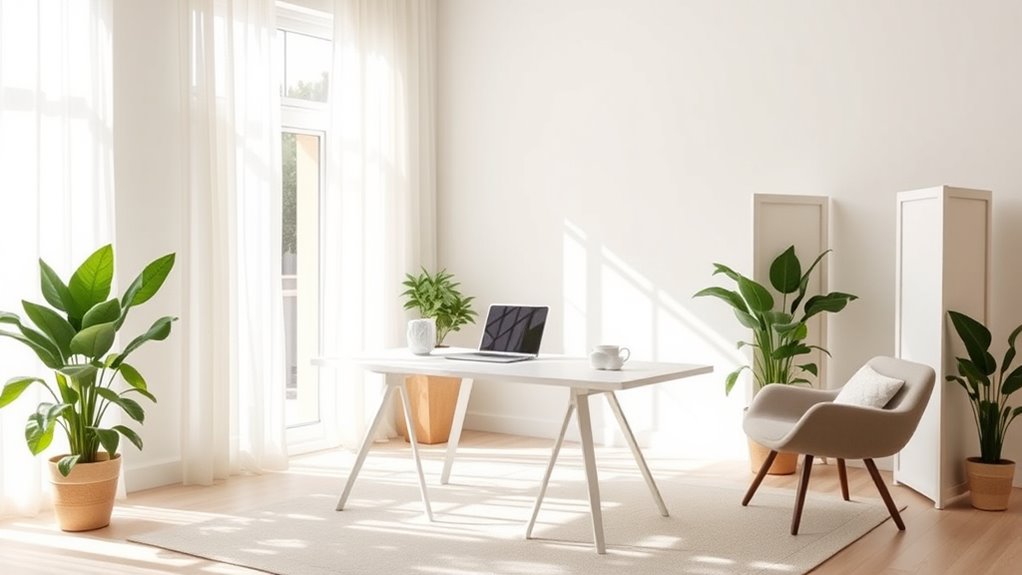
Divorce often prompts a reevaluation of your living space, especially when it comes to setting up or reorganizing a home office. Suddenly, your home becomes both a place of work and personal life, making it essential to establish a clear and functional environment. One of the first steps is to create dedicated zones within your space, so work doesn’t bleed into your personal time. This separation helps reinforce your personal boundaries, which is vital for maintaining a healthy work-life balance. When designing your home office, consider how your physical environment can support your mental boundaries—think about having a distinct workspace away from common living areas, or using room dividers if necessary. This way, when you’re working, you can focus fully, and when you step away, you can disconnect without lingering work-related stress.
Another important aspect is how your new setup influences co-parenting strategies. If you’re sharing your home with your children or ex-partner, you need to be intentional about the space and routines. Designate specific areas for work and for family activities, and communicate these boundaries clearly to everyone involved. Setting expectations around when you’re available for work versus family helps prevent conflicts and eases the transition for your kids. You might also create a visual cue—like a sign or a closed door—that signals when you’re in “work mode” and shouldn’t be disturbed. This not only reinforces your personal boundaries but also teaches your children respect for your work time.
Designate specific work and family zones to set clear boundaries and ease co-parenting transitions.
Furthermore, organizing your home office involves more than just furniture placement. You should think about storage solutions that help keep your workspace tidy, reducing clutter that can add to stress. When your work area is well-organized, it becomes easier to switch between work and personal life, which is especially important after a divorce when your emotional energy might be stretched thin. Incorporating beneficial ingredients like collagen and hyaluronic acid into your routine can also support your skin health, helping you look and feel more refreshed during busy days. When your work area is well-organized, it becomes easier to switch between work and personal life, which is especially important after a divorce when your emotional energy might be stretched thin. Establishing routines—such as starting and ending work at the same time daily—further supports work-life boundaries, helping you maintain consistency and mental clarity.
In essence, your home office after divorce isn’t just about having a place to work; it’s about creating a sanctuary that respects your personal boundaries, supports co-parenting strategies, and promotes balance. Thoughtful space planning and clear routines enable you to navigate this new chapter more smoothly, ensuring your work and personal life coexist without overwhelming each other. Setting up this environment with intention helps you regain control, reduce stress, and foster a positive outlook on your evolving home life.

MEELRYD 12 Stück Hängender Raumteiler | Room Divider Privacy Screen | Hanging Screen Room Divider | DIY Raumteilers Bildschirm for Home Hotel Office Bar Decoration 40 x 40 cm, Weiß
- Material: Hochwertiges, langlebiges PP mit Hohlschnitztechnik
- Setgröße: 12-teiliges Set für flexible Raumgestaltung
- Modulgröße: 40x40x1,3 cm pro Modul
As an affiliate, we earn on qualifying purchases.
As an affiliate, we earn on qualifying purchases.
Frequently Asked Questions
How Can I Create a Private Workspace in Shared Living Arrangements?
To create a private workspace in shared living, start by choosing a quiet corner or room where privacy concerns are minimized. Use room dividers or curtains to block noise and visual distractions. Communicate with housemates about your work hours to manage noise and respect boundaries. Adding a desk, good lighting, and soundproofing helps reinforce your work zone, making it easier to stay focused and maintain a healthy work-life balance.
What Are the Legal Considerations for Home Office Setup After Divorce?
Imagine your home as a sacred space, your personal sanctuary. After divorce, you must navigate legal considerations, like custody arrangements and property division, which affect your home office setup. You need to guarantee your workspace complies with legal agreements, avoiding conflicts or disputes. Consult with a lawyer to clarify rights and responsibilities, and document any modifications. This way, your work environment remains a peaceful haven amid life’s shifts.
How Do I Balance Work and Personal Life in a New Home?
To balance work and personal life in your new home, focus on establishing clear emotional boundaries and effective mediation strategies. Create designated work areas to separate your professional and personal spaces, helping you stay organized and reduce stress. Communicate openly with family members about your work hours, and set boundaries to protect your relaxation time. This approach guarantees a healthier work-life balance, even in a new environment.
What Furniture Is Best for a Functional Home Office Post-Divorce?
Think of your home office as a new chapter, shaping your future. You’ll want ergonomic chairs to support you through long work hours, symbolizing stability. Space-saving desks are your foundation, representing efficiency and clarity. Choose furniture that promotes focus and comfort, helping you establish boundaries. With the right pieces, your space becomes a sanctuary where work and life harmonize, empowering you to thrive in this fresh start.
How Can I Manage Children’s Needs While Working From Home?
To manage your children’s needs while working from home, establish clear childcare strategies and routines. Create designated times for educational activities, ensuring your kids stay engaged and supported. Use visual schedules and set boundaries to minimize interruptions during work hours. Communicate your schedule with your children, so they understand when you’re available and when you need focus. This approach helps balance work responsibilities with fulfilling your kids’ developmental needs effectively.

Marbrasse Schreibtisch Organizer und Büro Zubehör,5-Tier Briefablage,Mesh Büro Organizer für Schreibtischzubehör & Ablage(Schwarz)
- Ideal Desk Organizer: 5 trays and 1 magazine holder
- Maximizes Space: Vertical storage for books and papers
- Ample Storage Capacity: Fits office supplies and documents
As an affiliate, we earn on qualifying purchases.
As an affiliate, we earn on qualifying purchases.
Conclusion
Creating a dedicated, designed, and distinct home office helps you establish boundaries, balance, and brilliance. By setting a supportive space, you make room for renewal, resilience, and routine. Remember, reorganizing your workspace isn’t just about rearrangement; it’s about reclaiming your rhythm and reigniting your purpose. Embrace this new chapter with confidence, crafting a corner where comfort and productivity coexist. Your space, your sanctuary—set it up with strength, style, and a sense of self.

Türschild Büro – Bitte Nicht Stören, In Einem Meeting, Nicht Im Büro, Komm Rein, Bitte Klopfen, Bin Gleich Zurück – Türschilder Schilder Mit Schiebefunktion (6-optionen)
- Number of Status Options: 6/7 options for various messages
- High Visibility Design: Bright colors with clear white symbols
- Smooth Sliding Mechanism: Easy and precise status changes
As an affiliate, we earn on qualifying purchases.
As an affiliate, we earn on qualifying purchases.

GUHIRALONA Deko Bücher, Decorative Book Storage Box, Modern Shelf Display Item, Hidden Storage Solution for Home and Office
- Elegant Display Piece: Decorative shelf and table display
- Hidden Storage: Discreet space for valuables and jewelry
- Sturdy Construction: Durable materials with precise seams
As an affiliate, we earn on qualifying purchases.
As an affiliate, we earn on qualifying purchases.